Israel, Palestine, Gaza December 2025-
Written by Diana Thebaud Nicholson // September 14, 2026 // Israel, Middle East & Arab World // No comments
The 1997 Hebron Agreement (officially the Protocol Concerning the Redeployment in Hebron) was an Israeli-Palestinian accord signed on January 15, 1997. It facilitated an Israeli military withdrawal from 80% of Hebron, transferring administrative and security control to the Palestinian Authority while keeping the remaining 20% under Israeli military control to protect Jewish settlers
‘Bloodshed was supposed to stop’: no sign of normal life as Gaza’s killing and misery grind on
The term ceasefire ‘risks creating a dangerous illusion life is returning to normal’ for Palestinians squeezed into the remaining 42% of their land behind Israel’s ‘yellow line’
The toll from Israeli attacks in Gaza has fallen significantly compared with the preceding two years of war, when on average 90 Palestinians were killed each day, but significant numbers of civilians are still losing their lives.
On average, Israeli weapons now kill seven people a day. That rate of violent death would be considered an active conflict in many other contexts, raising questions about how accurately “ceasefire” describes the new status quo.
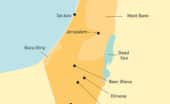
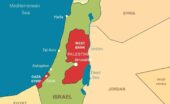
In the original ceasefire map Israel would continue to occupy 53% of the Gaza Strip, but the Israeli army unilaterally expanded that to 58% when it laid down markers to delineate its territory.
This division is Gaza’s new reality, with the US military preparing for an indefinite partition into what it calls a “green zone” under Israeli and international military control, where reconstruction would start, and a “red zone” to be left in ruins.
According to a geographical analysis by Forensic Architecture, the great bulk of Gaza’s fertile farmland is in Israeli hands, while the population is mostly confined to the barren coastal sand dunes, the “red zone”. 6 December The Guardian
14 September
Netanyahu says Gaza documentary ‘NAZA’ is ‘shocking incitement’
(Reuters) – Israeli Prime Minister Benjamin Netanyahu said on Monday that a new documentary film which alleges that mass civilian deaths were routinely built into targeting decisions in Gaza was part of a wave of global incitement against Jews.
“NAZA”, directed by Israeli journalists Yuval Abraham and Rachel Szor, won the Special Jury Prize at the Venice Film Festival on Saturday and received a 25-minute standing ovation when it was screened on Thursday.
The film takes its title from an Israeli military term for expected “collateral casualties” and is built around anonymous interviews with intelligence officers and soldiers involved in the war.
4 August
Netanyahu says no Israeli withdrawal from Gaza until Hamas has been completely disarmed
The Trump administration “sent us a draft. We did not agree. It is not our draft. We sent our comments. … This is our position,” Netanyahu said in a video posted on social media.
(AP) — Prime Minister Benjamin Netanyahu said Tuesday that Israel will not withdraw from its current lines in Gaza until Hamas has completely disarmed and pushed back on a recent deal announced by U.S. President Donald Trump.
Netanyahu’s remarks cast more doubt on the deal to disarm Hamas, which was seen as a potential breakthrough for ending the war. It also marked a rare public display of friction with the Trump administration.
3 August
By agreeing to disarm, Hamas is trying to call Israel’s bluff in Gaza
The move may lead to more pressure on Israel to implement Trump’s 20-point plan, but both sides are likely to keep dragging out the process while avoiding any real commitments.
Dr Julie Norman, Associate Fellow, Middle East and North Africa Programme
(Chatham House) … Israeli Prime Minister Benjamin Netanyahu will likely seek to drag out any further negotiations as much as possible; the last thing he wants as he goes into October’s elections is US pressure to withdraw from Gaza. Any public suggestion from Netanyahu that Israel would reduce its control in Gaza or make concessions to Hamas would likely lose him his voter base. (Far from accepting Israel’s withdrawal from the enclave, right-wing Israeli ministers have already announced plans for new settlements in Gaza.)
Dragging out the process also suits Hamas. Agreeing to Trump’s plan is likely a pragmatic move by new Hamas leader Khalil al-Hayya. It keeps the group in the conversation about Gaza’s future and may improve its position in relation to the Board of Peace – potentially even shifting the onus of intransigence to Israel. But Hamas knows that the actual decommissioning of its weapons will not be immediate. …
1 August
Israel Bombards Gaza, Days After Trump Announced Deal to Advance Cease-Fire
Palestinian officials said at least two people were killed. The deal announced by President Trump calls in part for Hamas to give up its weapons and Israel to stop its attacks in Gaza.
(NYT) The strikes came days after Mr. Trump announced that Hamas had agreed to give up its weapons during negotiations with his Board of Peace. …
31 July
Hamas says it will disarm if Israel halts strikes and withdraws from Gaza, but obstacles remain
(AP) — Hamas said Friday that it will begin disarming as part of a deal announced by U.S. President Donald Trump that also requires Israel to end its strikes and withdraw from Gaza. It marks a potential breakthrough in ending the war, but implementation faces major challenges.
Hamas also said that laying down its heavy weapons, which would come later in the process, was contingent on the creation of a Palestinian state, something Israel’s current government adamantly rejects.
Israel has not officially commented on the deal, which is part of a U.S.-brokered ceasefire announced last October. That agreement called for Hamas to disarm and hand over power to an independent Palestinian administration. Israel was to withdraw, and an International Stabilization Force was to deploy.
24 July
The Worst-Kept Secret of the Israeli-Palestinian Conflict
Trump turned a far-right fantasy—ethnic cleansing in Gaza—into U.S. policy. He needs to reject it.
By Yair Rosenberg
(The Atlantic) One of the more poorly kept secrets of the Israeli-Palestinian conflict is that many of those involved would prefer to take all the land and have the other side disappear. A 2011 poll found that two-thirds of Palestinians believed that their real goal should not be a two-state solution, but rather using that arrangement as a prelude to establishing “one Palestinian state.” A 2016 survey found that nearly half of Israeli Jews agreed that “Arabs should be expelled or transferred from Israel.” A poll in 2000, conducted during negotiations toward a two-state solution, found that only 47 percent of Israelis and 10 percent of Palestinians supported a school curriculum that would educate students to “give up aspirations for parts of the ‘homeland’ which are in the other state.”
These stark statistics illustrate why the conflict has proved so intractable: Palestinians and Israelis subscribe to dueling national movements with deeply held and mutually exclusive historical and religious claims to the same land. After a century of violence and dispossession, it should not be surprising that many would happily wish the other side away, if such an option existed. The current American administration, though, is the first to reinforce those ambitions, rather than curtail them.
20-22 July
Key takeaways from Khalil al-Hayya’s first speech as Hamas leader
The newly appointed leader says Hamas would work to help the people of Gaza and achieve a united Palestinian state.
In his televised address, he called for an immediate and complete cessation of Israeli aggression in Gaza, and set out the priorities of Hamas.
He reaffirmed the goal of a united Palestinian state
Al-Hayya said the primary goal of Hamas was achieving a Palestinian state encompassing Gaza and the Israeli-occupied West Bank, with its capital in East Jerusalem. This has been the group’s official objective since a revised policy document published in 2017.
He promised that Gaza would be rebuilt
Al-Hayya expressed “heartfelt greetings and unwavering loyalty to our patient and steadfast people in Gaza, the land of pride”. He said the Palestinians in Gaza would never be driven out, and promised that Hamas would work to alleviate the suffering of the inhabitants of the territory, and eventually rebuild it.
He vowed to secure the release of prisoners
Al-Hayya praised the history of Palestinian resistance against occupation through several uprisings over the years.
He said regional peace requires fair treatment of Palestinians
“What the region is witnessing proves that the stability of the Palestinian people is the key to the stability of the region,” he added.
Addressing the international community, al-Khalil said the “standard of justice collapses entirely if you fail to protect the people of Gaza”.
He thanked international mediators
Al-Hayya thanked the countries that have sought to mediate and end Israel’s war, although he did not mention the United States.
How will Khalil al-Hayya’s leadership shape Hamas?
Newly named Hamas leader al-Hayya faces pressure to cede power amid Gaza’s fragile ceasefire.
He was a member of a five-man council that led Hamas for almost two years.
Now, Khalil al-Hayya has been appointed to head the Palestinian group, which he joined when it was founded four decades ago.
Who is Khalil al-Hayya, Hamas’s newly elected political chief?
Veteran negotiator assumes Palestinian group’s overall leadership following a wartime election process.
21 July
I’m a Scholar of Genocide. We’re Entering a Terrifying New Era.
By Dr. Omer Bartov, professor of Holocaust and genocide studies at Brown University.
(NYT) What we have seen unfold in Gaza, where Israel stands accused in the International Court of Justice of committing genocide in the aftermath of the Oct. 7 Hamas attacks, appears to portend a new future for the crime.
It is a future in which other nations or leaders may have an incentive to pursue genocidal policies knowing they will not only get away with murder but may even benefit from it. It is a future in which the countries and international organizations that had been committed to stopping and punishing genocide may give license to its recurrence.
Israel is building a miles-long earthen barrier inside Gaza, entrenching its division
(AP) — The Israeli military is quietly but quickly building a giant earthen barrier separating the over 50% of the Gaza Strip it controls from the rest of the territory, according to satellite imagery, further entrenching the division of the tiny Palestinian enclave.
15 July
How many times has Israel violated the Gaza ceasefire? Here are the numbers
(Al Jazeera) Since the ceasefire took effect, Israeli attacks have killed at least 1,123 Palestinians and injured 3,616.
Since the declaration of a ceasefire in the Gaza Strip on October 10, 2025, Israel has violated the agreement with near-daily attacks, killing hundreds of people.
13 July
In Israel’s prisons, torture and death have become a norm that it barely tries to hide
Nesrine Malik
The suffering of Dr Hussam Abu Safiya is no isolated case. The abuse of Palestinian detainees is happening in plain sight, yet nothing changes
6 July
Bodies lie unclaimed and rats run rampant as months on Gaza’s ceasefire remains unfulfilled
(CNN) More than eight months on, there is little sign of progress. Instead, Gazans face a “dangerous status quo,” Nikolay Mladenov, a former UN official tasked with implementing the deal, warned in May. On Thursday the Board of Peace created to advance the ceasefire plan in Gaza touted two days of “highly productive” meetings in Cyprus, but the path forward remains unclear.
Officials have not yet set a timeline to bring in a Palestinian technocratic committee to take governance of the enclave from Hamas, and the proposed international force to support Gaza’s security infrastructure is yet to materialize.
30 June
Palestine weekly: Israel accelerates land grabs in Gaza, West Bank
Permanent alterations begin at Hebron’s Ibrahimi Mosque as plans advance for settlements in Gaza, while a UN inquiry finds Israel deliberately killed Palestinian children.
(Al Jazeera) Earlier this month, Israeli ministers had described their expanding colonial project in the language of intent – with Finance Minister Bezalel Smotrich announcing the “cancellation” of the Hebron Accords, and Israeli broadcasters reporting on the government cabinet’s intended “quiet annexation” of Gaza. This week, that vision began to take physical shape.
In Hebron, Israeli forces brought heavy machinery into the Ibrahimi Mosque and began installing steel beams over its open courtyard – a structural alteration the mosque’s director called a fundamental change to the ancient site’s historic character; Israeli authorities have also blocked the Muslim call to prayer there for a week and a half.
In Gaza, Smotrich announced that the Settlement Administration he heads had “completed plans” for three settlements in the north of the Strip and called on Prime Minister Benjamin Netanyahu to approve them. And along the so-called “Yellow Line” demarcating Israeli control within Gaza, Israeli forces pushed their cement markers further west, expanding the territory under their control.
23 June
Palestine weekly wrap: Israel’s ‘quiet annexation’ grows louder
An Al Jazeera cameraman is killed in Gaza and West Bank mosques are torched, as Israeli officials describe a deliberate policy of expanding control – by stealth in Gaza, and by decree in the occupied West Bank.
This week, the campaign of land seizure that Israeli officials have largely pursued unofficially was, in places, declared aloud. In Hebron, Finance Minister Bezalel Smotrich said he had “cancelled” the 1997 Hebron Agreement, stripping the Palestinian municipality of planning authority over the Old City and Ibrahimi Mosque.
The week intensified the early summer’s trends so far: international censure mounting on the one hand, and on the other, a state extending its hold over Palestinian land in Gaza and in the West Bank, in apparent contravention of international law and agreements.
Annexation – both quiet, and loud
The loudest move came in Hebron. Speaking at the inauguration of the new illegal settlement of Doran, Smotrich said that Israel had annulled the Hebron Accords and now held planning authority in the H2 zone of the occupied West Bank city containing Israeli settlements and the Ibrahimi Mosque.
The Israeli Foreign Ministry partially walked the claim back, saying the agreement itself had not been cancelled but that a cabinet decision months earlier had transferred planning powers over the Jewish community and holy sites. The Palestinian Authority called the move illegal, the Organisation of Islamic Cooperation warned it undermined the city’s status, and even the US State Department stated it “does not support Israel annexing the West Bank”.
28 May
Netanyahu Says Israel Will Control 70 Percent of Gaza, Squeezing Hamas
Israel’s military continues to conduct strikes and seize territory despite a cease-fire with Hamas. Many of Prime Minister Benjamin Netanyahu’s supporters see the war as unfinished business.
(NYT) Prime Minister Benjamin Netanyahu of Israel said Thursday that he had directed the Israeli military to expand its control of the Gaza Strip to 70 percent of the Palestinian enclave, ratcheting up the pressure on Hamas, the militant group that rules the rest.
His announcement came as negotiations on Gaza’s future have stalled over Hamas’s refusal to disarm and Israel’s nearly daily strikes in Gaza, both in apparent defiance of the cease-fire agreement struck in October, after two years of war.
At the time, as provided by the cease-fire, the Israeli military pulled back to an area encompassing roughly 53 percent of the ravaged enclave. But it has gradually taken more territory in Gaza, sometimes simply by moving concrete blocks with which it marks the boundary. Earlier this month, Mr. Netanyahu disclosed that Israel had increased its control to 60 percent of the territory.
Hamas retains de facto control of the shrinking western stretch of Gaza, where the vast majority of its roughly two million Palestinians are living, including many who have fled or been pushed out of the portion under Israeli control. Many Gazans displaced throughout the two-year war were warned not to approach the Israeli side.
20-22 May
Western nations warn Israel to end illegal settlement expansion, violence
Nine countries including UK, Germany and France warn settlements in occupied West Bank are a ‘breach of international law’.
The surge of new West Bank outposts
(GZERO media) With the help of government funds and the police, settlers have been creating new settlements at a rapid clip since Israeli Prime Minister Benjamin Netanyahu formed a coalition with far-right leaders Bezalel Smotrich and Itamar Ben-Gvir. The current coalition government itself has approved over 100 such communities. But settler groups have also formed settlements that the Israeli authorities don’t recognize, known as “outposts,” benefitting from a security system where law enforcement is reluctant to charge them – meanwhile, Palestinians could now face a death sentence if convicted of terror.
Israeli settlers burn vehicles, install caravans in occupied West Bank (video)
Palestinian residents say Israeli settlers burned vehicles, sprayed racist graffiti, and installed caravans near Palestinian communities, in the latest example of settler violence and settlement expansion in the occupied West Bank.
18-19 May
Israeli forces intercept the remaining activist flotilla vessels headed for Gaza
(AP) — Israeli forces on Tuesday intercepted all remaining vessels from an activist flotilla attempting to challenge Israel’s naval blockade of Gaza, the latest effort to highlight the grim conditions for nearly 2 million Palestinians with severe shortages of housing, food and medicine.
A live feed on the Global Sumud Flotilla website showed armed Israeli soldiers boarding the vessels as activists in life vests put their hands up. Soldiers then destroyed cameras mounted on the vessels.
Italy’s Foreign Minister Antonio Tajani called for an urgent review of Israel’s use of force after Italian activists said soldiers fired rubber bullets at vessels. Flotilla organizers claimed Israeli soldiers fired on five boats during the interdictions, with some damage.
Israeli troops intercept a flotilla off Cyprus as it tries to breach the Gaza blockade
(AP) — Israel’s navy intercepted an activist flotilla in international waters off Cyprus on Monday, halting the latest attempt to challenge a naval blockade of Gaza and draw attention to the grim living conditions for Palestinians in the war-battered coastal territory.
More than 50 vessels departed from the port of Marmaris, Turkey, last week in what the organizers of the Global Sumud Flotilla described as the final leg of their planned journey to Gaza’s shores.
… Other footage showed Israeli forces on speedboats approaching and instructing the activists to move to the front of the boat. At least 31 boats were intercepted in the operation by Monday evening, according to Global Sumud Flotilla’s tracker.
16 May
Israeli strikes kill six in southern Lebanon hours after extension of ceasefire
Three paramedics at health centre among dead, while Hamas military chief Izz al-Din al-Haddad killed in Gaza strike
(The Guardian) … Al-Haddad was described by Israel’s army as one of the senior Hamas military commanders who directed the planning and execution of the Hamas-led attacks on 7 October 2023… A Hamas spokesperson, Hazem Qassem, confirmed the killing on social media.
Palestinians forced to demolish own homes to make way for Israeli theme park
… More than 57 homes in al-Bustan, part of the larger Silwan district of East Jerusalem, have been demolished in the past two years with at least eight designated for demolition in the next few weeks. On the site a biblical theme park called the Kings Garden is to be built, supposedly where King Solomon took his leisure three millennia ago.
The park is designed to be part of a spreading, largely settler-driven, archaeological project focusing exclusively on Jerusalem’s Jewish past and centred on what has been called the City of David – despite the view of many Israeli archaeologists that the visible remains date to other eras, before and after King David’s iron-age reign.
Aviv Tatarsky, a senior researcher at Ir Amim, a group advocating for an equitably shared Jerusalem, says al-Bustan encapsulates the erasure of Palestinians from both geography and history.
“Israel is not willing to recognise the bi-national, multi-ethnic, multicultural reality of Jerusalem and it is wiping out first and foremost Palestinians – but really anything that is not Jewish, and then glossing it over with this Disneyfied nonsense,” he said. “If this happens to the end, Israelis will go there and they will see the story of the park and they will be completely ignorant of the fact that lives were destroyed, a whole community was destroyed to make space for it.” …
15 May
Three years of the West Bank’s ‘third Nakba’
Displacement and violence haunt Palestinian Bedouins, forced from their homes repeatedly since the Nakba of 1948.
(Al Jazeera) Fresh off the seventh forced displacement of his central West Bank Bedouin community since 1948, Abu Najjeh, the mukhtar, or leader, of the former Bedouin community of Ein Samiyawas, was in a rush, too busy reacting to the crises of the day – the continuing “third Nakba”, as he called it.
… Just that morning, Jewish settlers had stolen hundreds of sheep and two tractors from a member of his extended family in Jiljilyya, to the north of Rammun, as well as shooting and killing 16-year-old Yousef Kaabneh – also from Abu Najjeh’s Kaabneh clan.
Like the community of Ein Samiya, Yousef and his family had been forcibly displaced from Wadi as-Seeq in 2023, one of dozens of Palestinian Bedouin communities emptied since October 7, 2023. Already ascendant, the Israeli far right has used the Hamas-led attack on Israel, along with the cover of Israel’s genocidal war on Gaza, to ramp up attacks on Palestinians in the West Bank and seize more land.
14 May
‘It’s like stealing’: Palestinian family’s seized property listed on Booking.com
West Bank home described as ‘ideal for outdoor gatherings’ is among 41 listed rentals in illegal Israeli settlements
(The Guardian) A new report by Ekō, a US-based advocacy group focused on corporate accountability, lists 41 Booking.com listings in 14 illegal Israeli settlements across the occupied West Bank in two main clusters, along the Jordan valley including the Dead Sea, and in the settlement ring that has been built around East Jerusalem, including two inside Jerusalem’s old city, on territory captured by Israel in 1967 and annexed in 1980.
The settlements involve the transfer of a civilian population into occupied territory, which is a violation of the fourth Geneva convention, and the Rome statute (the founding document of the international criminal court) which deems such colonisation a war crime.
The main operating arm of Booking.com is headquartered in the Netherlands, where a criminal complaint by the European Legal Support Center, a pressure group supporting Palestinian rights, is under review by Dutch prosecutors.
13 May
Hamas must disarm, not ‘disappear’ from Gaza: Board of Peace’s Mladenov
Seven months since the “ceasefire” came into force on October 10, Israeli forces have killed at least 856 Palestinians and control more than 50 percent of the Gaza Strip
‘We are not asking Hamas to disappear as a political movement’, says the diplomat overseeing the US-brokered truce in Gaza.
(Al Jazeera) Nickolay Mladenov, the top diplomat overseeing the United States-brokered “ceasefire” in Gaza as part of US President Donald Trump’s International Board of Peace, has said he could envision a political role for Hamas in post-war Gaza if the Palestinian group disarms.
He said the phased ceasefire deal was paralysed over Hamas not yet disarming, calling it “not negotiable”.
Disarmament remained a sticking point that stalled progress on other fronts, while Hamas blamed Israel for continuing to violate the truce.
The first phase of the agreement saw the release of the last captives seized in southern Israel in October 2023, in exchange for Palestinians detained by Israel.
The transition to the second phase envisioned Hamas handing over its weapons, Israeli forces withdrawing, and the rebuilding of destroyed swaths of the coastal enclave after more than two years of war. …
According to Gaza’s Ministry of Health, 120 Palestinians, including eight women and 13 children, have been killed in Israeli attacks on Gaza since the truce with Iran on April 8.
A United Nations inquiry last year found that Israel’s war on Gaza amounted to genocide as Israeli soldiers “intentionally killed” civilians.
11 May
EU announces sanctions against violent Israeli settlers
Bloc breaks its lengthy deadlock on the issue but falls short of imposing full-scale trade sanctions
(The Guardian) France’s foreign minister, Jean-Noël Barrot, said the EU was “sanctioning the main Israeli organisations guilty of supporting the extremist and violent colonisation of the West Bank, as well as their leaders”.
“These most serious and intolerable acts must cease without delay,” he wrote on social media.
The full list of names has not been published following Monday’s agreement in principle but is understood not to include two extremist Israeli ministers, Itamar Ben-Gvir and Bezalel Smotrich. The pair were put under UK sanctions last June for their “repeated incitements of violence against Palestinian communities”.
The Global Sumud Flotilla has not given up
(Al Jazeera) The Israeli attack on part of our flotilla has convinced us we must continue with our mission to Marmaris.
In defiance of Israel’s genocide, and in solidarity with the Palestinian people, our fleet is moving forward. Despite experiencing or being informed of the violent interception, we are en route to the Turkish port of Marmaris, where we will regroup. I am sailing on board one of the boats as I write this.
In their long history, Gaza flotillas have often been decried as performative, except, of course, they have yielded some very concrete results: back in October, despite being violently intercepted once again, the GSF mission contributed to the mounting pressure on Israel to accept a ceasefire, which was announced days after the violent interception.
2 May
‘Go inside, he will kill you’: Israeli militants step up West Bank school attacks
Education is being targeted across Palestine, with the murder of 14-year-old Aws al-Naasan only the latest in a spree of violence
(The Guardian) Education is under attack across occupied Palestine. The situation is most severe in Gaza, where more than 600,000 school-age children are approaching the end of a third year without formal in-person education. Israeli attacks there have killed at least 792 teachers and 18,639 students, according to the UN, and damaged or destroyed nine out of 10 school buildings.
But students and schools are also targets of spiralling Israeli violence in the occupied West Bank, where there is a climate of near total impunity for attacks on Palestinians.
… A few hours after Aws was killed outside his school, settlers attacked and demolished a British- and European-funded school for Palestinian children in a village 25 miles to the north.
In Hammamat al-Maleh, in the northern Jordan valley, settlers used bulldozers to raze four classrooms, school toilets and the two playground areas into a heap of twisted metal and crumpled plastic, scattered with ruined books.
The French government, which contributed some of the funding to the school, has demanded compensation from the Israeli government for the destruction.
In the south Hebron Hills, on 13 April Israeli settlers put razor-wire across the road to the school attended by Palestinian children from Umm al-Khair village, blocking students from crossing since then.
30 April
Israel’s brazen interception of Global Sumud Flotilla bound for Gaza sparks fears for 175 arbitrarily detained
(Amnesty) Responding to reports that Israeli forces intercepted 22 vessels and detained around 175 crew members of the Global Sumud Flotilla, which was attempting to break Israel’s illegal blockade and deliver essential humanitarian aid to the occupied Gaza Strip, amidst Israel’s ongoing genocide, Amnesty International’s Senior Director for Research, Advocacy, Policy and Campaigns at Amnesty International, Erika Guevara Rosas, said:
“Israel’s brazen and unlawful interception of the Global Sumud Flotilla vessels and the arbitrary detention of dozens of activists, underscores the dangerous consequences of decades of impunity for Israel’s ongoing atrocity crimes against Palestinians, including genocide in the Gaza Strip and apartheid, and its unlawful occupation of Palestinian territory.
“It is appalling that activists participating in a peaceful solidarity mission aiming to break Israel’s unlawful blockade of the Gaza Strip and deliver medical aid and supplies to people facing a catastrophic humanitarian crisis – due to conditions deliberately imposed by Israel -have been arbitrarily detained once again.
25 March
Israeli former PM calls on ICC to halt West Bank ‘Jewish terrorists’ after prosecutions stop
Guardian analysis of settler violence shows no Israelis prosecuted since 2020 for killing Palestinian civilians, as former military, police and spy chiefs describe ‘organised Jewish terrorism’
Israel has not prosecuted its citizens for killing Palestinian civilians in the occupied West Bank since the start of this decade, a Guardian analysis of legal data and public records show, creating impunity for a campaign of violence.
Attacks have spurred former prime minister Ehud Olmert to call for an intervention by the international criminal court (ICC), to “save the Palestinians and us [Israelis]” from state-backed settler violence, carried out with the complicity and sometimes participation of the police and military.
“I have decided not only to not remain silent, but to draw the attention of the ICC in The Hague so that it may take enforcement measures and issue arrest warrants,’” Olmert said in written comments to the Guardian.
18 February
Israel kills two in Gaza, blocks thousands from medical exit through Rafah
The latest deaths come as just 260 people, out of 18,500 in urgent need, have been allowed to seek medical care via the crossing to Egypt, the United Nations says.
Israel continues to block thousands of Palestinians from seeking urgent medical attention through the partially-reopened Rafah crossing in its ongoing, more than two-year genocidal war on the enclave.
3 February
Israeli attacks on Gaza kill 23 in one of deadliest days since ‘ceasefire’
Shelling kills 14 Palestinians in north, attacks on tents kill six in south as medical evacuations through Rafah crossing suspended.
(Al Jazeera) Israel has killed at least 23 Palestinians in attacks across the Gaza Strip in one of the deadliest days since an October “ceasefire” began, according to medical sources.
The sources told Al Jazeera several children were among the casualties on Wednesday, including an 11-year-old girl. Israel has killed more than 520 Palestinians since the “ceasefire” went into effect nearly four months ago.
2 February
The next stage of the Gaza genocide has begun
(Al Jazeera) Recent remarks by former US Secretary of State Mike Pompeo herald the next phase of Israel’s genocidal project: erasure.
Speaking at the United States-based, Israel-focused MirYam Institute last month, he said, “We need to make sure that the story is told properly so that when the history books write this, they don’t write about the victims of Gaza”
Pompeo went on to say that every war has civilian casualties, but the true victims in this case are the Israeli people. His concern is that October 7th and the war in Gaza would be remembered “incorrectly”.
It seems Pompeo wants to argue that the people of Gaza are just “collateral damage” in Israel’s war. They are to remain nameless, faceless, forgotten. He wants their stories erased from the pages of human history.
His remarks reflect the next phase in Israel’s genocide. Dissatisfied with its progress in eliminating Gaza’s people, their mosques, their schools and universities, their cultural institutions, economy and land, Israel and its Christian-Zionist allies like Pompeo have now embarked on the erasure of memory and martyrdom.
Relief for patients leaving Gaza as Rafah opens, but thousands still wait
Israeli restrictions mean only five Palestinians were allowed to leave Gaza for treatment via the Rafah crossing on the first day of its reopening
Handful of sick and wounded Palestinians allowed through Rafah crossing on first day
Numbers Israel permitted to enter Egypt after reopening border were far lower than expected following delays
A small number of sick and wounded Palestinians have begun crossing into Egypt to seek medical treatment after Israel permitted a limited reopening of the Palestinian territory’s Rafah border post as fragile diplomatic efforts to stabilise the conflict inch forward.
About 150 people were due to leave the territory on Monday, and 50 to enter it, according to Egyptian officials, more than 20 months after Israeli forces closed the crossing. However, by nightfall, Reuters reported that Israel had permitted 12 Palestinians to re-enter the territory, according to Palestinian and Egyptian sources. A further 38 had not cleared security and would wait on the Egyptian side of the crossing overnight, it said.
In terms of those exiting, Israel permitted five patients escorted by two relatives each to cross to the Egyptian side, the sources said. That brought the total number entering and exiting to 27. Palestinian officials blamed delays on Israeli security checks. Israel’s military had no immediate comment.
About 20,000 Palestinian children and adults needing medical care hope to leave the devastated territory via the crossing, according to Gaza health officials. Thousands of other Palestinians outside the territory hope to enter and return home.
When Israel took control of the Rafah crossing – Gaza’s only crossing not shared with Israel – it described it as necessary to prevent weapons smuggling by Hamas. The move isolated the territory, cutting off a critical lifeline for Palestinians seeking access to medical care, travel and trade.
31 January
Israeli airstrikes kill 32 in Gaza, Palestinian officials say
Israel said it targeted Hamas militants and weapons sites. The majority of the dead were women and children, the Gaza Health Ministry said.
(WaPo) Airstrikes killed at least 32 people in the Gaza Strip late Friday into Saturday, according to hospital and emergency response officials in the enclave, as Israel launched what it said were extensive strikes targeting Hamas militants and weapons sites.
It was one of the bloodiest nights in Gaza since the Israel-Hamas ceasefire brokered by President Donald Trump in October, as the peace process enters its precarious second phase. Israel is due to open the key Rafah border crossing with Egypt on Sunday and begin allowing the limited entry and exit of people — a concession made by Prime Minister Benjamin Netanyahu under pressure from Trump.
28 January
Gaza under Israel fire as ‘desperate’ Palestinians seek supplies
(Al Jazeera) PM Netanyahu says the ceasefire terms will not move forward unless Hamas fully disarms.
The crucial Rafah border between Gaza and Egypt is expected to open in the “coming days”, according to Israeli media reports.
Israeli plans for a Rafah “camp” in Gaza has been slammed as a continuation of genocide.
The Foreign Press Association expressed disappointment after Israel’s Supreme Court again postponed ruling on a petition seeking free and independent media access to war-battered Gaza.
Qusay Maher Ismail Halaika, 28, a Palestinian man who was shot by Israeli forces close to a checkpoint near Bethlehem, has died of his wounds.
Israeli forces have carried out attacks on several locations in the occupied West Bank, arresting dozens of people, many of whom were assaulted.
Armed Israeli settlers also set fire to three Palestinian villages in Masafer Yatta in the occupied West Bank. The UN says more than 1,800 settler attacks were documented in 2025, surpassing previous records.
Palestinians are “desperate” for the Rafah crossing to reopen as a prolonged closure by Israel compounds widespread suffering, the United Nations warns.
Israeli forces continue with their deadly attacks in violation of the October ceasefire with Hamas with at least four Palestinians killed in the al-Sanafour area of war-battered Gaza City.
Israel has signalled a “limited” number of people will be allowed to cross Rafah into Egypt – subject to Israeli inspections – but made no mention of allowing in aid at scale as demanded by the international community.
Israel’s genocidal war on Gaza has killed at least 71,660 people and wounded 171,419 since it began in October 2023. An estimated 1,139 people were killed in Israel during the Hamas-led October 7, 2023 attacks, with about 250 taken captive.
26 January
Remains of last Israeli held in Gaza after 7 October 2023 returned
Return of police sergeant Ran Gvili’s body should pave way for progress on second phase of Trump ceasefire plan
(The Guardian) The handover of the body marks the completion of a key initial demand of Donald Trump’s ceasefire plan for Gaza. It should open the way for progress in its second stage, which the US announced was under way earlier this month.
Key Trump aides last week laid out an extremely ambitious plan for Gaza, with his son-in-law, Jared Kusher, describing it as a blueprint for “catastrophic success”. It envisages a unified Palestinian-run Gaza, which represents a rebuff to the aims of Israeli extremists, including some in the governing coalition, who have sought the deportation of Gaza’s population and the building of Israeli settlements in its place.
The plan’s success will depend largely on whether Trump and his “board of peace” have the determination to implement the plan, overcoming Israeli objections and obstruction. That includes whether a mechanism can be created inside Gaza to oversee the disarming of Hamas, with potential contributors to a proposed international security force ruling out any direct confrontation with the militant group.
21 January
‘Barbaric new era’: Palestinians, UN slam Israeli demolition of UNRWA HQ
Head of UN agency for Palestinian refugees says demolition in occupied East Jerusalem is a ‘blatant breach of international law’.
The bulldozing of the headquarters of the United Nations agency for Palestinian refugees (UNRWA) in occupied East Jerusalem has sparked condemnation from the world body and Palestinian leaders, who warn the move signals a “barbaric new era” of unchecked defiance of international law.
Israeli forces, accompanied by far-right National Security Minister Itamar Ben-Gvir, stormed the compound in the Sheikh Jarrah neighbourhood on Tuesday, demolishing structures and confiscating equipment. Ben-Gvir described the destruction as a “historic day”.
17 January
Trump’s Billion-Dollar Board of Peace
The new entity has a global remit and a steep price for a permanent seat.
By Paul Beckett and Isabel Rueh
(The Atlantic) The U.S. president has sent letters of invitation to various heads of government to join a new Board of Peace, which he will chair. The organization was envisioned as part of the United Nations–backed effort for the reconstruction and transitional governance of Gaza. But the new board’s charter, details of which have not been previously reported, appears to give the board a global remit, according to a copy we reviewed. And the price of a permanent position on the board is very steep.
The charter’s membership section…says members will be invited by the chairman to participate for a three-year term, subject to renewal by Trump. But there is a way to skip the renewals and lock in for the long term: “The three-year membership term shall not apply to Member States that contribute more than USD $1,000,000,000 in cash funds to the Board of Peace within the first year of the Charter’s entry into force.”
What the money will be used for isn’t stated. Its expected purpose is to fund reconstruction and other revitalization efforts in Gaza and perhaps beyond, in whatever conflicts Trump and the board choose to address. But the charter doesn’t address that. Its finance section simply states: “Funding for the expenses of the Board of Peace shall be through voluntary funding from Member States, other States, organizations, or other sources.” That could leave interested world leaders wondering where, exactly, their money would go.
Israel objects to White House’s pick of leaders for ‘board of peace’
Israel says some appointments to the board, which will oversee the administration and reconstruction of Gaza, are ‘contrary to policy’
The White House and other sources announced a flurry of appointments and invitations to the organisation over the last two days, including Turkish president Recep Tayyip Erdoğan, the Egyptian president, Abdel Fattah el-Sisi, former UK prime minister Tony Blair and the president of Argentina, Javier Milei.
The group, described as the “greatest and most prestigious board ever assembled, at any time, any place” by Donald Trump on Thursday, is meant to temporarily govern Gaza in place of Hamas.
The board is part of Trump’s 20-point plan to end the war in Gaza. Despite a ceasefire announced in October, Israel continues to kill Palestinians. At least 463 Palestinians have died in Gaza since the nominal truce was established.
Israel also continues to restrict food and other forms of aid into the strip, with hunger prevailing in Gaza. Most of the population lives in substandard housing, with frayed tents providing little protection from the elements. Palestinians in Gaza have already died from hypothermia during particularly harsh cold snaps this winter.
The exact makeup of the board of peace is still unclear, but two separate governing boards have been announced.
The “founding executive board” will focus on investment and foreign relations, while the “Gaza executive board” will oversee another group, the National Committee for the Administration of Gaza (NCAG), which will oversee the day-to-day affairs in Gaza.
15 January
Netanyahu says the announced start of Gaza ceasefire’s next phase is a ‘declarative move’
(AP) — Israeli Prime Minister Benjamin Netanyahu has cast the U.S. announcement that the fragile ceasefire in Gaza would advance to its second phase as largely symbolic, raising questions about how its more challenging elements will be carried out.
Speaking late Wednesday with the parents of the last Israeli hostage whose remains are still in Gaza, Netanyahu said the governing committee of Palestinians announced as part of the second phase was merely a “declarative move,” rather than the sign of progress described by U.S. envoy Steve Witkoff.
14 January
Gaza is entering the second phase of the ceasefire plan Trump helped broker, US says
(AP) — The United States said Wednesday that it is moving into the next phase of a Gaza ceasefire plan that involves disarming Hamas, rebuilding the war-ravaged territory and establishing the group of Palestinian experts that will administer daily affairs in Gaza under American supervision.
President Donald Trump’s envoy Steve Witkoff said in a post on X that the deal that the Republican president helped broker was entering its second phase following two years of war between Israel and Hamas, including the establishment of a technocratic government in Gaza.
13 January
Israel poised to start construction of bypass through heart of West Bank
Road project, part of blueprint for new illegal settlement in E1 area east of Jerusalem, is considered a tool of annexation
(The Guardian) Israel plans to start work next month on a bypass road that will close off the heart of the occupied West Bank to Palestinians
EU left pushes for action against Israel as attacks on Gaza continue
Momentum for trade measures against Israel has stalled — but with children still dying in Gaza, the left wants the issue back on the table.
(Politico Eu) Despite a U.S.-brokered ceasefire agreement in October, Israel has kept attacking targets in the Gaza Strip with airstrikes, drones and tanks, prompting the pro-Palestinian movement to renew its calls for the EU to take action against Israel.
The coalition — led by France’s La France Insoumise, Spain’s Podemos, Portugal’s Bloco de Esquerda, and Nordic left parties — has launched a European Citizens Initiative titled “Justice for Palestine” calling on the EU executive suspend ties with Israel over its “genocide against the Palestinian population, and its ongoing violations of international law and human rights.”
7 January
Children in Gaza return to school after years without formal education
In Gaza City, the sound of children learning can be heard once again.
The tents that now serve as classrooms are noisy and a little chaotic but lively. Some teachers point to boards covered in English letters; others invite pupils to come forward and write basic Arabic words.
It is nowhere near a normal school day. But after the Israel-Hamas ceasefire in October, it’s a start.
2 January
The Guardian view on Gaza’s winter: the world must take heed as Palestinian suffering deepens again
Editorial
Families are struggling to survive amid the devastation. Israel’s ban on international NGOs will worsen this disaster
s Gaza enters the bleakest period of winter, children are dying of hypothermia, drowning in flooded camps and burning to death as their families try to cook in flimsy tents. Israel destroyed nine out of 10 homes over more than two years of war. Camped amid the ruins, Palestinians struggle against strong winds, heavy rain and freezing temperatures. Aid deliveries resumed following the ceasefire, staving off the famine that had taken hold in parts of the territory, but remain wholly insufficient: 1.6 million people face acute food insecurity. The sanitation infrastructure has collapsed.
The UK, Canada, Japan, France and six other nations have jointly warned that the situation is catastrophic. Yet Israel is now deepening one of the world’s worst humanitarian crises. On Tuesday, it announced that it is deregistering 37 NGOs active in Gaza. They must cease all operations there by 1 March unless they meet its new “security and transparency standards” – including by disclosing the personal details of staff. Many of the listed groups are among the best-regarded in their field, including Oxfam, Médecins Sans Frontières and the Norwegian Refugee Council.
Angelina Jolie visits Rafah Crossing as Gaza aid groups face Israeli suspension
CNN- Angelina Jolie, the actress and former special envoy to the United Nations Refugee Agency, visited the Rafah Crossing on Friday as part of a humanitarian trip to Egypt,
Her visit comes as Israel said it will suspend the operations of dozens of aid groups working in the Gaza Strip.
“I spoke to humanitarian agencies who are working hard to do their best to overcome the restrictions and challenges of delivering necessary aid into Gaza. I walked through a large warehouse that was full of items that were denied entry, most of them medical,” Jolie said in a statement.
Earlier this week, Israel said it will suspend the operations of international aid groups that did not renew their registration, which includes requiring organizations working in Gaza to provide personal details of their staff members.
Aid agencies have repeatedly voiced concerns over those requirements, citing the safety of their employees.
Israel’s move comes as 10 countries warned that Gaza’s humanitarian situation is facing “renewed deterioration” and that conditions in the enclave “remain catastrophic.”
Israel said its registration rules are to prevent Hamas from exploiting international aid, a claim the UN and aid groups have rejected. A US government review earlier this year found no evidence of widespread theft by Hamas, claims both Israel and the US State Department have made.
2025
1 December
It’s not just Gaza. From the West Bank to Syria and Lebanon, Israel’s onslaught continues
Nesrine Malik
Broken ceasefires, bombing, ground incursions and mounting deaths: Israeli imperialism is now expanding across the region
It is clear now that the ceasefire in Gaza is only a “reducefire”. The onslaught continues. There are near-daily attacks on the territory. On a single day at the end of October, almost 100 Palestinians were killed. On 19 November, 32 were killed. On 23 November, 21. And on it goes. Since the ceasefire, more than 300 have been killed and almost 1,000 injured. Those numbers will rise. The real shift is that the ceasefire has reduced global attention and scrutiny. Meanwhile, Israel’s emerging blueprint becomes clearer: bloody domination not only in Gaza, but across Palestine and the wider region.
A “dangerous illusion that life in Gaza is returning to normal”, is how Amnesty International’s secretary general, Agnès Callamard, described this post-ceasefire period. Israeli authorities have reduced attacks and allowed some aid into Gaza, she said, but “the world must not be fooled. Israel’s genocide is not over.”
13 December
Israel says its military killed Hamas commander Raed Saed in Gaza City strike
If Saed is dead he would be most senior militant to be killed since October ceasefire
The senior Hamas commander Raed Saedhas been killed in a strike on a car in Gaza City, the Israeli military said on Saturday.
The attack killed four people and wounded at least 25 others, according to Gaza health authorities. There was no immediate confirmation from Hamas or medics that Saed was among the dead.
“In response to the activation of a Hamas explosive device that wounded our forces today … prime minister Benjamin Netanyahu and defence minister Israel Katz instructed the elimination of the terrorist Raed Saed, head of Hamas’ force buildup,” the prime minister and the defence minister said in a joint statement.
The Israeli military described Saed as “one of the architects” of the 7 October 2023 attack on Israel that sparked the war in Gaza. The military earlier on Saturday said two reserve soldiers were lightly injured after the device detonated “during an operation to clear the area” in southern Gaza.
6 December
Qatar and Egypt urge Israeli withdrawal to secure next step in Gaza peace deal
Mediators of delicate truce say troop removal and deployment of international force crucial to second phase
Qatar and Egypt, the guarantors of the Gaza ceasefire, called on Saturday for the withdrawal of Israeli troops and the deployment of an international stabilisation force as the necessary next steps in fully implementing the fragile agreement.
The measures were spelt out in the US- and UN-backed peace plan that has largely halted fighting, though the warring parties have yet to agree on how to move forward from the deal’s first phase.
Gaza ceasefire deal at a ‘critical moment’, mediator Qatar says
Qatar’s PM, Turkish FM speaking at Doha Forum urge urgent progress to next phase as Gaza truce violations mount.
(Al Jazeera) Qatar’s prime minister has warned that the Gaza ceasefire is at a “critical moment” and could unravel without rapid movement towards a permanent peace deal, as Turkiye’s foreign minister also cautioned that the process could lose momentum.
Sheikh Mohammed bin Abdulrahman bin Jassim Al Thani told the Doha Forum on Saturday that what exists on the ground amounts to merely a “pause” in hostilities rather than a genuine ceasefire.
Arab, Muslim nations reject Israel exit-only plan for Gaza’s Rafah crossing
Foreign ministers slam Israel’s breach of the ceasefire, and its one-way exit plan which aims to ‘displace Palestinian people from their land’.
Gaza mediators Egypt and Qatar, and six other Muslim-majority countries have raised the alarm over Israel’s stated plan for a one-way opening of the Rafah border crossing, which would allow Palestinians to leave their territory, but not to return, and block the entry of humanitarian aid.
3 December
More than 200 leading cultural figures call for release of jailed Palestinian leader
Group including Margaret Atwood, Ian McKellen and Richard Branson sign open letter to free Marwan Barghouti
(The Guardian) More than 200 leading cultural figures have come together to call for the release of Marwan Barghouti, the jailed Palestinian leader seen as capable of uniting factions and bringing the best hope to the stalled mission of creating a Palestinian state.
Barghouti, 66, has spent 23 years in prison after what legal experts described as a flawed trial. An elected parliamentarian at the time of his arrest, he remains the most popular Palestinian leader, consistently topping polls as the people’s choice to lead.
Israel’s persistent refusal to release him, including in the recent prisoner swap that followed an October ceasefire in the Gaza war, does not appear to be linked to any intelligence assessment that he would pose a threat to Israel’s security but instead to the influence he may wield in building unity and a momentum to a two state-solution.
There is also concern that the Israeli government is willing to pass new laws that will allow Israel to impose the death penalty on Palestinian prisoners, a law that could include Barghouti.
The recent passage of a UN resolution backing Washington’s call for the establishment of an international stabilisation force inside Gaza has not led to a flood of nations willing to provide troops, partly because they fear the force will find itself locked into a conflict with Hamas over the decommissioning of its weapons, Israel’s precondition for leaving the strip.
1 December
Israeli settlers attack and rob Italian and Canadian volunteers in West Bank
Group beaten in early hours of morning in village where they volunteered to help protect Palestinians from settler violence
The pace and intensity of attacks in Ein al-Duyuk have increased substantially over the past two months since the establishment of a settler outpost nearby and the arrival of young and aggressive settlers.
Activists say that violent incidents have become an almost daily occurrence. Attacks have included settler mobs breaking into homes and beating villagers, stealing 200 sheep, two cars and destroying solar panels.
While all settlements on occupied territory are illegal under international law, irregular outposts are illegal under Israeli law. Ein al-Duyuk is in Area A of the West Bank, which means it is meant to be administered by the Palestinian Authority and illegal for Israelis to enter.
‘They have total impunity’: West Bank settler violence surges after Gaza ceasefire
UN logs 260 attacks in October alone, its highest monthly tally, as settlers attack farmers and burn olive trees