Canada, the Arctic & Antarctic November 2025 –
Written by Diana Thebaud Nicholson // March 15, 2026 // Arctic and Antarctic, Canada // Comments Off on Canada, the Arctic & Antarctic November 2025 –
15 March
Nordic leaders meet in Oslo with Carney as Arctic tensions sharpen over Greenland, Russia
Leaders’ joint statement refers to deepening defence industry co-operation
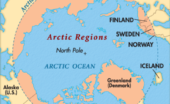
(CBC)The leaders of five Nordic countries — plus Canada — gathered in Oslo for a mini-summit to discuss strengthening defence capabilities in the face of higher international tensions, including recent threats by the Trump administration to take over Greenland.
The meeting on Sunday was the last stop in Norway for Prime Minister Mark Carney, who arrived early Friday to witness a major NATO military exercise in the northern part of the country involving more than 30,000 troops, sailors and aircrew.
Carney was asked pointedly by the Danish media whether Canada would commit troops to defend Greenland against threats of U.S. annexation by the Trump administration.
“We stand four square behind the principles of sovereignty, territorial integrity. It is for the people of Greenland and Denmark to decide their futures,” Carney said. “We will back that with measures as necessary.”
12 March
Carney announces $35B for defence, infrastructure in Canada’s North
Funding includes building military hubs and roads, improving northern airports
(CBC) Prime Minister Mark Carney landed in Yellowknife on Thursday to make the defence announcement before leaving for Norway
Prime Minister Carney announces ambitious new plan to defend, build, and transform the North
Canada’s North is going through a period of profound change. The world is becoming more dangerous and divided. The assumptions that shaped decades of Canadian defence and security are being upended. Climate change is causing our Arctic region to warm nearly three times faster than the global average, a shift that great powers are actively looking to exploit.
For decades, previous Canadian governments have taken measures to build and secure the North. But these lacked the scale and the breadth of strategy that this vast region demands. Canada’s new government has the ambition and capacity to do this, and Prime Minister Carney is acting with our Territorial and Indigenous partners to seize the opportunity. We are moving forward with a comprehensive plan backed by over $40 billion, including more than $35 billion in federal investments to defend, build, and transform Canada’s Northern and Arctic region, and major projects that represent around $10 billion in investment.
Canada is moving from reliance to resilience. We will no longer depend on any one nation, and instead build a stronger, more independent country. With this new plan, Canada is taking full responsibility for defending our Arctic sovereignty. We will boldly develop the critical minerals, clean energy, and trade corridors – the full economic potential – of the region. At the centre of this plan are the 140,000 Northerners and Indigenous Peoples who will have stronger, more sustainable, more connected communities, greater opportunities, and a lower cost of living. …
Carney heads to Arctic war games as NATO flexes muscle in Norway
Canadian officials say observing exercise will help inform domestic Arctic defence
During the visit, the first by a Canadian prime minister to the Nordic country since 1980, Carney will also meet with northern European leaders, including those from Denmark, Sweden, Finland and Iceland.
It’s being billed as a Nordic summit by the Norwegians — a meeting that will give Carney a chance to expand in person on his speech in Davos, Switzerland, where he said middle powers need to start co-operating more closely.
24 January
Threats to Greenland underscore need for investment in Canada’s Arctic, experts say
By Heather Wright
(BNN Blommberg) U.S. President Donald Trump’s threats to annex Greenland have thrown a spotlight on Arctic security and brought more scrutiny to Canada’s own readiness in the north. The nation’s military presence is considerably smaller than other countries like Russia, the United States and even Norway, which has 15 military facilities in its Arctic territory.
“I think the time has gone where we can just hope to ride the coattails of American efforts in the Arctic. I think we’ve seen how well that’s working out for us,” said Brendan Bell, CEO of the West Kitikmeot Resources Corp., an Inuit-owned company proposing a deep-water port in Gray’s Bay, Nunavut.
Bell is among the proponents of the federal government providing more investment in northern infrastructure – not just to drive industry, but boost security, as well.
In its fall budget, Ottawa committed $1 billion over four years for Arctic infrastructure, including deepwater ports, airstrips and all-season roads.
Trump’s Greenland gambit exposes Canada’s Arctic vulnerability
U.S. saber-rattling has Canada refocusing on Arctic security and long-ignored gaps in defense.
(Politico) Just when Canada thought it was getting its military house in order by finally meeting NATO spending targets, President Donald Trump’s designs on Greenland have exposed the vulnerability of the vast, underpopulated and undergunned Canadian Arctic.
Trump’s Greenland threats have turned the Arctic from a distant, long-term concern into an urgent strategic test for Canada, exposing how a region long treated as remote is now entangled in disputes over shipping routes, sovereignty and alliance politics.
Successive Canadian governments have long understood that melting polar ice has left the Arctic more accessible — and more vulnerable to Russian and Chinese interest — but have done little to counter threats traditionally seen as unlikely.
Now, with Trump openly questioning Greenland’s security and threatening acquisition, some Canadians are asking whether Canada could be next.
… [Harry Flaherty, an Inuit business leader and president of the Qikiqtaaluk Corporation] has been lobbying Ottawa for more than a decade to help build a deep-water port on Baffin Island, several hundred miles from Greenland — one of many competing projects pitched as Canada scrambles to protect its economy from Trump’s threats.
19 January
Beset By Ice: Covering Canada’s most contested corridor
A year-long reporting project supported by the Pulitzer Center’s Ocean Reporting Network will reveal the complexities of shipping and icebreaking in the Northwest Passage
Karen Pinchin
Do you live in the North and have a story about how Arctic icebreaking and shipping affects your daily life? Are you a southern-based scientist whose research depends on access to icebound regions? Do you work aboard a commercial, cruise, navy or Coast Guard vessel and wish there was something more Canadians knew about your work?
When it comes to swiftly melting northern ice, we’re in a uniquely consequential moment in history — and Canadian Geographic needs your help. Supported by the Pulitzer Center’s Ocean Reporting Network, we’re embarking on a new project, aimed at painting a fuller portrait of the climate change-induced transformation of life in the North amid today’s geopolitical tension
A longtime science journalist, I became obsessed with this file last spring while talking with Arctic oceanographer Clark Richards in his office at the Bedford Institute of Oceanography.
He told me a story about a Canadian icebreaker rerouted from its scientific mission to escort foreign-flagged vessels through fog tinted red by distant wildfires, and another about stranded Argentine sailors warding off a polar bear with emergency flares. He detailed the myriad threats posed by increasingly unpredictable Arctic ice, made even more perilous by a rising number of vessels traversing frigid waters above under-mapped seafloor.
What I didn’t know about Arctic icebreaking, it turned out, could fill an iceberg’s bulk below the ocean’s waves. So I got to work, interviewing scientists, government officials, community members, and those in private industry, trying to make sense of this unfolding drama. Then, the U.S. president threatened, yet again, to take over Greenland. The Canadian Arctic and our country’s sovereignty now rest uneasily at the heart of this global furor.
7 January
MIGS Appoints Alex Dalziel as Senior Fellow for Arctic Security
We are delighted to welcome Alex Dalziel as our new Senior Fellow for Arctic Security. Alex Daziel brings over two decades of experience in Canadian intelligence and national security, along with widely published expertise on Arctic geopolitics, hybrid threats, and disinformation. His commentary appears across major international media, and he is a frequent speaker in Canada, the U.S., and Northern Europe. His government career included senior analytical and advisory roles at Privy Council Office (PCO), Department of National Defence (DND), Canada Border Services Agency (CBSA) and Canada School of Public Service (CSPS), supporting leaders across the Five Eyes and NATO.
2025
9 December
Canada Taps Its Top Space Firms for Arctic Military Satellites
Takeaways by Bloomberg AI
Canada signed a partnership to develop a multibillion dollar military satellite system with Telesat Corp. and MDA Space Ltd.
The system, called Enhanced Satellite Communications Project – Polar, will create a multi-frequency Arctic military satellite network for the Canadian Armed Forces.
The new capability will boost Canada’s sovereignty over its Arctic, enhancing the air force and wider armed forces’ abilities.
Both Ontario-based companies said Tuesday they would create a multi-frequency Arctic military satellite network for the Canadian Armed Forces. Procurement for the project will be led by a defense investment agency started by Prime Minister Mark Carney in October and led by former Royal Bank of Canada executive Doug Guzman.
The system is called Enhanced Satellite Communications Project – Polar. The exact amount of the investment was not disclosed.
18 November
Canada, U.S., Finland outline plan to build new icebreakers
(Globe & Mail) Canada, the United States and Finland laid out a plan to collaborate on building new icebreakers to resupply their aging fleets, a sign of ongoing co-operation between Ottawa and Washington despite stalled trade talks.
Canadian ambassador to the U.S. Kirsten Hillman, Homeland Security Secretary Kristi Noem and Finland’s Minister of Economic Affairs, Sakari Puisto, signed a joint statement of intent in Washington Tuesday vowing co-operation on the polar vessels.
22 October
Geothermal power is the key to cheaper energy in the Canadian Arctic
Gordon Brasnett specializes in techno-economic modelling, policy analysis and risk assessment as a fellow in the Cascade Institute’s Ultradeep Geothermal Program. Leighton Gall is the program’s technical and Indigenous energy lead. Peter Massie leads the Cascade Institute’s Geothermal Energy Office.
(Globe & Mail opinion) Canada is on thin ice if it can’t defend its Northern sovereignty. Warming is making the Arctic more accessible and vulnerable, and powerful countries – including a newly predatory United States – are moving to secure influence in the region.
But one factor above all others handicaps our ability to defend that sovereignty: energy costs in the Canadian Arctic are among the world’s highest. Most Northern communities, military bases and industrial sites rely almost entirely on diesel burned in generators and shipped from the South. For decades, this polluting system has been vulnerable to disruption and absurdly expensive.
The solution is nearby. Beneath the frozen Arctic landscape lies an abundant source of low-cost energy: geothermal heat. By drilling kilometres into the Earth, Northern communities can tap this heat directly for needs like food cultivation and space heating, or convert it into low-carbon, all-season electricity. Geothermal electricity plants actually perform best in cold climates, because they leverage the differential between the hot temperatures underground and cool temperatures at the surface.
Until recently, engineers could tap geothermal power only where hot rock and a naturally occurring water reservoir were relatively close to the surface. But new breakthroughs – hybrid drill bits that slice through granite, automated rigs that steer with surgical precision and closed-loop well designs that harvest heat without relying on underground water – have expanded the geological conditions where geothermal energy sources can be viable. …
20-22 October
In a Warming Arctic, a Fight Brews Over the Fabled Northwest Passage
The Inuit of the far north helped solve the mystery of a doomed 19th-century expedition. Now Canada needs them to strengthen its claim to this newly contested region.
(NYT) For centuries, death and disaster met those searching for the fabled Northwest Passage. The promise of a shorter sea lane between Europe and Asia, somewhere through the icelocked labyrinth of Canada’s Arctic Archipelago, lured explorers like Sir John Franklin to their doom.
Today, with sea ice melting fast, the Northwest Passage is open long enough to welcome thousands of tourists annually aboard large cruise ships. Nine are expected to dock this year at Gjoa Haven, an Inuit hamlet whose history is tied to the passage’s past and could help secure its future.
“The Northwest Passage goes through our communities, our land,” said Raymond Quqshuun, Gjoa Haven’s mayor.
As global warming makes the Arctic — and its immense natural resources — more accessible, it is fueling a superpower rivalry not seen since the Cold War. Russia is beefing up its military positions in the region, sometimes in cooperation with China, a self-described “near-Arctic state” that is also expanding commercial and scientific activities.
President Trump is threatening to annex Canada and force a sale of Greenland. He wants to build a $175 billion “Golden Dome” defense shield to intercept intercontinental ballistic missiles flying over the Arctic.
16 September
Nations Aiming for Arctic Power Can’t Get Enough of These Ships
The US and Canada want more icebreakers to counter Russia and China in the Arctic, as the polar region — and competition for it — heats up.
(Bloomberg) At a shipyard in Finland last month, workers cut the first steel for a new icebreaker ship. Over the next three years, about 10,000 tons of the metal will go into the hull before the vessel is carried across the ocean to Quebec for completion.
The CCGS Arpatuuq, expected to launch in 2030, will be the first heavy icebreaker built — at least partly — in Canada in more than half a century. The C$3.3 billion ($2.4 billion) ship will be 139 meters (about 450 feet) long, with a helipad, hangar and room for 100 crew members. “Moon pools” located at midship will provide direct access to the Arctic Ocean for polar research and, potentially, military surveillance.
A second heavy icebreaker, the CCGS Imnaryuaq (both are named for Inuit locations) is already under construction at Vancouver’s Seaspan Shipyards. Canada has only a single heavy icebreaker in service at the moment, and it’s in bad shape. In all, the government has funded two dozen new icebreakers to more than double the current fleet.
The buildout has gained urgency this year. Relations between Canada and its neighbor soured after US President Donald Trump threatened steep tariffs and insisted it should become the 51st state. That led Prime Minister Mark Carney to announce an additional C$9 billion in defense spending, emphasizing the ability to patrol and defend Arctic territory as crucial to Canada sovereignty.
24 July
Carney taps Inuk leader Virginia Mearns as Arctic ambassador for Canada
Prime Minister Mark Carney has appointed Inuk leader Virginia Mearns as Arctic ambassador, asking her to represent Canadian interests in a region that’s become a strategic frontier as climate change opens new shipping routes through waters rich with natural resources.