Alan Hustak 1944-2026 R.I.P.
Written by Diana Thebaud Nicholson // May 27, 2026 // Absent Friends, Wednesday Night Authors // Comments Off on Alan Hustak 1944-2026 R.I.P.
 Hustak, we have a problem!
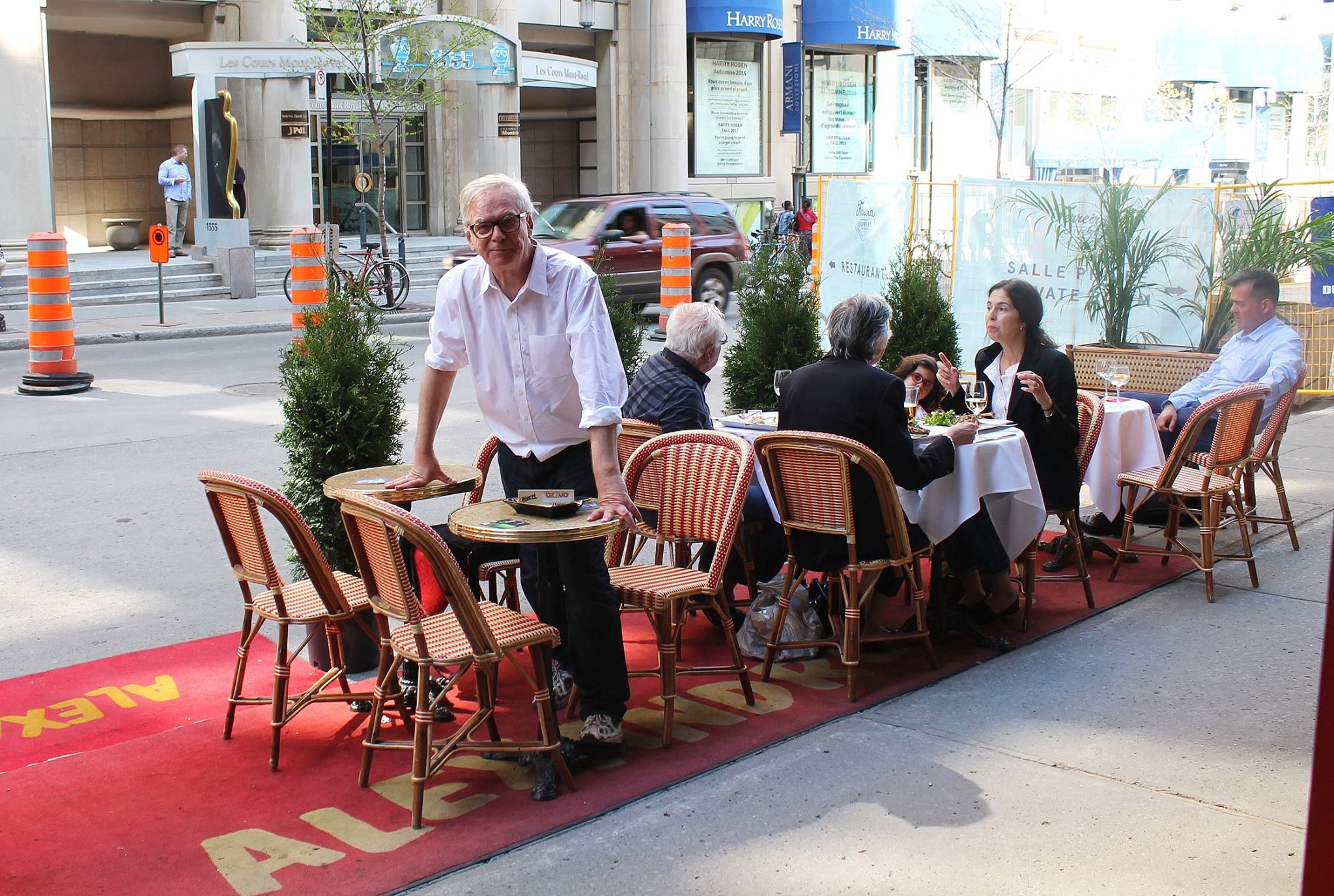
Former Gazette copy editor and Alan’s long-suffering colleague, Jim Withers, wrote this brilliant tribute to our dear friend Alan who was known for (among other accomplishments) the numerous sensitive, perceptive obituaries he published:
“Hustak, we have a problem!”
That was a common cry of copy editors dealing with Montreal Gazette reporter Alan Hustak.
Alan, who died May 21 in Saskatchewan at age 82, was legendary when it came to leaving a minefield of typos throughout his news copy. Misspelling names – especially in obituaries – was his specialty.
In one obit, he’d spelled the name of the deceased three ways, something I only noticed when it occurred to me that the dearly departed appeared to be listed as the same person delivering the eulogy. Another time, Alan wrote a news brief about a 118-year-old man being stabbed while hanging around a pool hall when it actually turned out to be an 18-year-old. Easy catch, but I missed others. Copy editors referred to this as “being Hustakked.”
Whatever exasperation I felt, especially when Alan cheerfully brushed off my complaints with a breezy “that’s what editors are for,” I couldn’t help but like him. Sure, he was a sloppy writer, but Alan was a newsman through and through, and he could tell a story – in print, on TV and radio, and in person. Especially over a beer or two.
 Alan was a captivating raconteur, and I kept urging him to write a memoir using the tales he told while holding court in bars about rubbing shoulders with John Diefenbaker, partying with Péquistes in Old Montréal (with René Lévesque sleeping in his bathtub), and having an unspecified actor’s ashes in a filing cabinet at work.
One such occasion took place at the Brutopia pub in 2011, when Alan learned he was sitting next to the son of pioneering TV journalist Norman DePoe:
“It was minutes before the gruff, no-guff broadcaster was supposed to conduct an interview and DePoe appeared to be passed out, with his face on the table. Then, as a producer counted down, ‘three … two … one,’ DePoe lifted his head, sat back in the chair, adjusted his tie, and launched into his usual coherent, incisive interview, sober as a judge – albeit a gravelly voiced one.”
DePoe’s son not only didn’t take offence, he remembered a similar incident involving his dad.
Alan was just getting started, pouring out war story after war story from his TV and newspaper reporting days. One concerned the late Réal Caouette. A federal election campaign was under way. Reporter Alan found the firebrand Créditiste leader in an airport and asked him for an interview. Time was short because Caouette was soon to board a plane and, even more pressing, needed to take a leak. The interview did take place, Alan said, because he promised that the TV camera would focus on Caouette’s upper body while he simultaneously relieved himself and fielded questions.
Alan told us how, as a reporter from Saskatchewan (for the Moose Jaw TV station, I believe), he managed to scoop the national press on an interview with John Diefenbaker on a train during an election campaign in the early 1960s. Eschewing reporters from the major dailies and TV networks, Dief treated Alan like an old friend.
Alan’s Diefenbaker stories always included his imitations, in peculiar the way Dief began sentences with an “Ahhhh,” like someone clearing his throat.
Alan and Dief had many dealings over the years, until the mid-’70s. Alan suspected that the friendship had cooled as a result of the Dief learning that he was a Catholic.
But shortly before the former PM went to the big parliament in the sky, Alan was surprised to get a call from him. “Ahhhh …,” Dief began in his distinctive way, “you’re a Catholic, right?”
“Yes,” Alan replied.
“According to your beliefs, when I die, will I spend eternity with my first wife or my second?”
Thrown by the question, Alan hesitantly replied, “Well, since it is heaven, I think you’ll spend it with the one you want to be with.”
“OK, that goes in your memoir, too,” I told Alan, although, with his bad hearing, I don’t think he caught that.
Before leaving, Alan bought me a beer, and told everyone he was searching for the right words in which to toast his 70-year-old senator cousin (Rod Zimmer), who was about to marry a 20-year-old woman (Maygan Sensenberger). Then, perhaps to head off any bad jokes from the pub crowd, Alan said, “Oh, I know, how many times does 70 go into 20?”
I last saw Alan eight years ago when he flew in from his native Saskatchewan, where he’d moved to work for a weekly newspaper, after a messy departure from the Montréal Gazette in 2009.
Alan was doing research for a book. He had a passion for history, resulting in close to 20 books he penned on subjects as varied as the 130 Canadians who were aboard the Titanic, a biography of former Alberta premier Peter Lougheed, and the history of Montreal’s St. Patrick’s Parade. On this get-together, he gave me a copy of the Justin Trudeau biography he’d written. The fact that a British company had published it made it impossible to sell it in Canada, Alan explained, but he hoped an updated version would be published here in time for the next federal election. (I later gave it a read and sent him a list of some of the most egregious errors.)
Of course, I razzed him about all the names he misspelled, and recalled the time he was working on the obituary of a 104-year-old Armenian woman with a long, difficult-to-spell name. “You were more concerned about getting a photo than getting her name spelled right.”
“We had a picture of her,” Alan said, “but I called her daughter to see if she had one in which her mother looked more Armenian, more peasant-y.”
Alan told me how he came to Montreal for Expo 67, and through a chance encounter with a CBC-TV boss in the Jamaican Pavilion, he landed a job here. Because they wanted an anglo, and not an ethnic, his on-air name was Alan Houston. Later, when he went to CTV, where they wanted an ethnic and not an anglo, he switched back to Hustak. (His actual first name, he discovered when he checked his birth certificate late in life was Allan. He not only produced typos, he was one.)
When he told me how happy he was to be back in the West, where his late mother had been a beloved elementary school teacher, I asked him how his long-time partner Stéphane was adapting.
“He loves it even though he’s a Québécois through and through.”
Stéphane, I learned, was a currency trader, 25 years Alan’s junior, and did virtually all the cooking. It was a relationship built to last.
I recalled overhearing a phone conversation Alan was having at his desk in the newsroom a few years earlier, involving him talking about his partner.
“So Stéphane asks the vet if the dog will feel any pain, and the vet – I don’t know if he’s an idiot or was just being brutally honest – says, ‘Well, he’s old and … .’ Stéphane starts crying like a baby. I start crying like a baby … . That was the last of my beautiful cocker spaniel, and I’m never going to have another one.”
Then, after a pause, Alan said with a chuckle, “Until Christmas.”
Alan was a true newsman, whether writing for a big-city daily or a small-town Prairie weekly. As his final employer, the Fort Qu’Appelle Times, wrote:
“Working in a community where everyone knows everyone, Alan never lost sight of the responsibility journalists have to inform, question and hold others accountable. He covered the news right until the very end. To those who knew him, Alan was a larger-than-life figure in journalism – intelligent, determined and passionate about the craft. Yet beyond the bylines and deadlines, he lived a quiet life with his partner of 38 years and found meaning in the simple moments away from the spotlight.”

He chased the dust of quiet, forgotten roads,
With camera in hand to catch the fading light,
On lonely prairie chapels where the silence spoke,
And old abandoned houses weathering the night.
He found a haunting beauty in the towns left behind,
Preserving ghosts of history before they slipped away,
A dapper soul with stories in his brilliant mind,
Capturing the shadows of a passing day.
Now he’s trading earthly maps for endless skies,
Rejoined with those who loved the open drive,
With his mother Gertie and his aunts, miles rolling by,
Behind the wheel, so joyful and alive.
Alan was born on March 29, 1944, in Esterhazy, Saskatchewan, to a family with deep roots in nearby Stockholm. He spent his youth moving between Saskatchewan, Alberta, and Washington, D.C., before pursuing his high school education with the Jesuits at Campion College in Regina. It was during these formative years that his insatiable curiosity, intellect, and love for a good story were truly cultivated.
While he spent the 1970s and 1980s at the forefront of national broadcasting—working as a radio reporter for the CBC and serving as the Quebec Bureau Chief for CTV National News—Alan was best known for his exceptional print journalism. He spent over 20 years with the Montreal Gazette and frequently wrote for The Globe and Mail. A dapper gentleman known for his immense general knowledge, quick wit, and uncompromising standards, Alan was widely considered “the last of the old-style reporters”—always out to get a true scoop.
Beyond journalism, Alan was a celebrated author of more than a dozen books. He was a leading authority on the Titanic, famously penning Titanic: The Canadian Story. His invaluable contributions to chronicling Canadian history earned him the distinct honor of receiving both the Queen Elizabeth II Diamond Jubilee Medal and the Queen Elizabeth Platinum Jubilee Medal.
Most recently, Alan lived right here in our community, where he became an anchor for the Fort Qu’Appelle area. He poured his heart into contributing to the local newspaper, the Fort Qu’Appelle Times (Grasslands News), ensuring that local stories were always told with dignity and care. He was also a passionate champion and volunteer of the local heritage museum.
Outside of his work, Alan was an avid traveler who loved the open road. He spent countless hours driving across the country, capturing photographs of abandoned churches, old weathered houses, and forgotten ghost towns. Many of his favorite journeys were spent traveling alongside his beloved mother Gertie, and his aunts, Aggie, Josephine, and Helen, who shared his love for adventure and loved driving like no one else.
Alan was predeceased by his beloved mother Gertie; his dear aunts, Aggie, Josephine, and Helen; and his cousins, Wayne and Barbara Zimmer, and the Hon. Rod A.A. Zimmer. He is survived by his loving partner, who shared a life full of deep devotion, laughter, and beautiful memories alongside him.
A memorial service to celebrate Alan’s extraordinary life will be held in the Garden of the McDonald House – Heritage Museum (198 Bay Avenue, Fort Qu’Appelle) on Saturday, May 30, 2026, at 2:00 p.m., with Rev. Jo Mader officiating. Attendees are kindly encouraged to bring a lawn chair.
In lieu of flowers, donations may be made in Alan’s memory to the Canadian Cancer Society or the Fort Qu’Appelle Heritage Museum.
“Alan wrote the final chapters of so many lives with grace. Now, the community he loved so dearly salutes him. The family extends their deepest gratitude to Joseph Andrew Zimmer for his unwavering support and strength during this difficult time. Rest in peace, Alan.