U.S.-Venezuela September 2024 – January 30 2026
Written by Diana Thebaud Nicholson // January 30, 2026 // Americas, U.S., Venezuela // Comments Off on U.S.-Venezuela September 2024 – January 30 2026
Venezuela approves bill to open oil sector to foreign investment after US pressure
Law will give private companies more control but experts unsure whether changes go far enough for US
(The Guardian) Donald Trump has eased some sanctions on Venezuela’s oil industry and said US oil companies were on the ground carrying out site assessments for potential operations.
The new hydrocarbons law promises to give private companies control over oil production and sales, ease taxes and allow for independent arbitration of disputes, while largely maintaining state control over oil production.
Analysts remain cautious about the law’s practical application, arguing that the text lacks clarity and that the changes, while welcome, are insufficient to deliver the overhauls sought by the US as it attempts to revive Venezuela’s battered oil industry.
29 January
Friction emerges between Trump, Venezuelan opposition over Machado’s return
The administration may prefer reliability over democracy in Caracas, worrying advocates for opposition leader María Corina Machado.
(WaPo) Venezuela’s leading opposition figure made a solemn request to House lawmakers during a closed-door meeting on Capitol Hill last week: “Tell the president that I want to go back to Venezuela as soon as possible,” said María Corina Machado, according to notes taken by a person in the room and reviewed by The Washington Post.
Her request for the message to be relayed to President Donald Trump suggested a disconnect between Machado and the Trump administration, which has praised the pragmatism of Nicolás Maduro’s successor, Delcy Rodríguez, and declined to provide a timeline for Machado’s return.
28 January
Rubio Says Venezuela Will Submit Monthly Budget to White House
Democrats sharply questioned the plan, including the role of Qatar in managing an account funded by the sale of Venezuelan oil.
(NYT) Venezuela’s interim government has agreed to submit a monthly “budget” to the Trump administration, which will release money from an account funded by the country’s oil sales and initially managed by Qatar, Secretary of State Marco Rubio said on Wednesday.
But the plan drew sharp questions from skeptical Democrats, and Mr. Rubio conceded that it was “novel” and hastily designed. The role of Qatar — a Middle Eastern country thousands of miles from Venezuela whose ruler has won President Trump’s favor — drew particular criticism from Democrats, who questioned its legality and transparency.
It’s in Venezuela’s interest to co-operate with US, Rubio says in heated testimony
(BBC) He made it clear that, in the administration’s view, the removal of the entire regime could have triggered huge instability – including fighting, looting, and the mass movement of refugees that would put pressure on neighbouring countries.
The better option, he suggested, is to deal pragmatically with the people currently in power.
At the same time, it’s also clear that the US intends to prioritise American business interests in Venezuela. How that fits with the country’s sovereignty is the big question.
5 takeaways from Rubio’s Senate hearing on Venezuela
(The Hill) … Rubio said Trump reserves the right to use military force if Delcy Rodríguez, Venezuela’s interim president and a former Maduro deputy, fails to cooperate fully with U.S. demands.
Rubio set to threaten Venezuela with military action if U.S goals not met
U.S. Secretary of State Marco Rubio held a year-end news conference on Friday and stated that the “single most serious threat to the United States from the Western Hemisphere is from transnational terrorist criminal groups.” Rubio stated that “there’s one (country) that doesn’t cooperate. And it’s the illegitimate regime in Venezuela. Not only do they not cooperate with us, they openly cooperate with terrorist and criminal elements.”
U.S. Secretary of State Marco Rubio plans on Wednesday to warn that the Trump administration is ready to take new military action against Venezuela if the country’s interim leadership strays from U.S. expectations.
In prepared testimony for a hearing before the Senate Foreign Relations Committee, Rubio says the U.S. is not at war with Venezuela and that its interim leaders are cooperating.
But he notes that the Trump administration would not rule out using additional force if needed following a raid to capture then-President Nicolás Maduro early this month.
15-16 January
“Unbelievably Embarrassing”: Outrage Over Machado’s Nobel Prize Gift To Trump
The Nobel Committee, however, was quick to clarify that such a transfer has no legal or symbolic standing. According to the Norwegian Nobel Institute and the Nobel Committee, once awarded, a Nobel Peace Prize cannot be transferred, shared, or reassigned.
Trump accepts Nobel medal from Venezuelan opposition leader Machado
Machado said meeting was ‘excellent,’ but did not elaborate
Encounter comes as Trump has praised Caracas’ interim leader
Trump has prioritized securing access to Venezuelan oil – not bringing democracy back to Venezuela
(Reuters) – Venezuelan opposition leader Maria Corina Machado gave her Nobel Peace Prize medal to U.S. President Donald Trump on Thursday during a White House meeting, in a bid to influence his efforts to shape her country’s political future.
A White House official confirmed that Trump intends to keep the medal.
In a social media post on Thursday evening, Trump wrote: “Maria presented me with her Nobel Peace Prize for the work I have done. Such a wonderful gesture of mutual respect. Thank you Maria!”
Rubio Won; Liberty Lost
Is it really a win when the regime you detest stays in place?
By Missy Ryan and Vivian Salama
(The Atlantic) … This may be that defining moment for Rubio, Donald Trump’s secretary of state, national security adviser, and, now, unofficial Venezuelan viceroy. Maduro’s ouster begins to fulfill an objective central to Rubio’s political identity: ending the reign of Latin America’s leftist strongmen. But it leaves a tandem goal—replacing them with democratically elected governments—nowhere closer to reality. That latter objective is instead colliding with Trump’s focus in Venezuela on oil, migration, and regional dominance. Determined to prove that military intervention will pay for itself, he’s shown no interest in giving the Venezuelan people a say in their own affairs. The disconnect poses a dilemma for Rubio, who had long advocated for widening the circle of those reaping the blessings of liberty.
14 January
Senate Republicans blocked a move to restrict U.S. military action in Venezuela.
Senate Republicans blocked a resolution that sought to force President Trump to seek congressional approval for any U.S. military action related to Venezuela. Republican leaders garnered enough support for a procedural maneuver to kill the resolution after Senators Josh Hawley of Missouri and Todd Young of Indiana flipped their position and joined the effort to stop it from coming up for a vote.
12 January
US plan to exploit Venezuela’s oil could eat up 13% of carbon budget to keep 1.5C limit
Exclusive: ClimatePartner analysis shows how move would risk plunging Earth further into climate catastrophe
Venezuela’s proven oil reserves are so vast that if they were fully tapped, they would, by themselves, exhaust the entire carbon budget for keeping the world within the 1.5C temperature rise that climate scientists say is the limit for avoiding the worst effects of climate breakdown.
Such an eventuality is unlikely. After years of sanctions, Venezuela’s oil infrastructure is decrepit and crumbling. But… Donald Trump has urged oil companies to invest $100bn (£74bn) to get Venezuela’s wells flowing.
10 January
How Venezuela’s New Leader Went From Revolutionary to Trump’s Orbit
(NYT) Delcy Rodríguez, a guerrilla’s daughter, started out as a provocateur. She pivoted to revive a ravaged economy, making her vital to U.S. plans to run Venezuela.
Ms. Rodríguez, 56, faces an immense challenge. She must placate an American president who says the United States will run Venezuela for years to come, while trying to stabilize a cratering economy and consolidate control over governing institutions and power brokers in her inner circle imbued with hatred of U.S. meddling.
But those who know her say her capacity for hurling insults at the West, virtually a job requirement in Venezuela’s government until Mr. Maduro’s capture, is complemented by a pragmatic streak, making her a survivor of both internal purges and geopolitical shifts.
Her transformation from Mr. Maduro’s ideological provocateur into a straight-talking technocrat seemingly capable of working with Mr. Trump unspooled as she amassed power in recent years by leading an effort to pull Venezuela out of an economic crash marked by children dying of hunger.
8 January
Trump’s Team Orders Big Oil Into Venezuela: ‘Do It for Our Country’
Energy bosses see long haul ahead, but worry they’ll get railroaded into promising a quick fix
By Jennifer A Dlouhy, Josh Wingrove, Courtney Subramanian, Kevin Crowley, and Mia Gindis
(Bloomberg) This week has seen a frantic push toward the goals the president outlined after the capture of Nicolás Maduro: Vassalize Venezuela, and convert the world’s biggest crude reserves into US might. The Trump administration confiscated two more tankers and announced it would take delivery of millions of barrels of Venezuelan oil. There were non-stop calls with the makeshift regime in Caracas, with Secretary of State Marco Rubio conducting his in Spanish.
Also on speed dial were US oil bosses, who’ve been summoned to a crucial Washington meeting on Friday. They’re on the hook to turn Trump’s vision into reality. The pitch, one person said, will be: “Do it for our country.” That might be a hard sell, given the massive multi-decade investments that are needed.
To the White House, the prize is even bigger. In a dawning new era of great-power rivalry the US has two main adversaries. China depends on imported oil — and has been getting some of it from a friendly Venezuela, at discounted rates. Russia is a crude exporter that could struggle if prices fall too far. Trump’s play for Western Hemisphere dominance could increase US leverage over both. The administration has signaled that in the new Venezuela, Beijing and Moscow won’t be welcome.
… ties with the new administration of Acting President Delcy Rodríguez — sworn in hastily after Maduro’s capture — still look like they’re being crafted on the fly. Trump has said the US will be running Venezuela, likely for years. Rodríguez has balked at that. “We are here governing alongside the people, and no one else,” she told state TV on Tuesday. “There is no external agent governing Venezuela.”
A White House official said the US is proceeding with a plan but adjusting as circumstances change, downplaying any suggestion of an ad hoc approach.
Trump has a China problem in Venezuela: What to do with Beijing’s debt and oil stakes
(AP) — When it comes to claiming that Venezuelan oil is now under his control, President Donald Trump is mincing no words. But no small part of that oil belongs to China under contracts it struck with Caracas years ago, setting the stage for a delicate diplomatic dance in the next few weeks.
Some experts expect Trump to work with China in an effort to stabilize trade relations. After all, Trump is expected to visit Beijing in April as part of an effort to protect the fragile trade truce he reached with Chinese President Xi Jinping late last year.
“The administration appears focused on avoiding unnecessary escalation or new irritants with Beijing while keeping leverage firmly on Washington’s terms,” said Craig Singleton, senior director of the China program at the think tank Foundation for Defense of Democracies.
He added that he doubted Trump would risk turning Venezuela into a “flashpoint that complicates trade dynamics or Trump’s personal engagement with Xi.”
China is owed at least $10 billion from Venezuela, according to various estimates, a debt that former Venezuelan President Nicolás Maduro had paid down by shipping oil to China. It is possible that the interim Venezuelan government complying with Washington’s demands could question the legality of those loans-for-oil deals and cease payments.
‘This Is OUR Hemisphere’
“War for Oil?” Not So Fast… Ah Yes, What About the Oil?
Byron King
(The Daily Reckoning) … The U.S. Geological Survey estimates over 300 billion barrels of resource in Venezuela, which puts that nation at the top of the list of world oil domains. Here’s an illustration:
Clearly, Venezuela’s oil reserves are far ahead of those in Saudi Arabia, Iran, Canada and her oil sands, Iraq, and down the list even Russia and certainly the U.S. with about 40 billion barrels identified and on the national books.
But in general, most of Venezuela’s oil has a big problem that presents massive challenges to geologists, chemists, engineers, transport specialists, refiners, accountants and politicians. That is, the geological fact is that most of Venezuela’s oil is what’s called “heavy, sour crude;” and the term “ultra-heavy” also pertains. Think in terms of gooey asphalt on a hot day.
In essence, most of Venezuela’s oil is thick and tarry, composed of long-chain hydrocarbon molecules. It’s viscous like cool molasses, does not flow well in a pipeline, and requires all manner of engineering and chemical tricks just to lift it to the surface, let alone transport it, store it at a terminal, and load it onto a tanker for export.
At the refinery, Venezuela’s heavy oil is high in sulfur (i.e., “sour”), which requires specialized methods to process. It’s also high in metal content, which again fouls the refining chemistry.
Still, it’s possible to blend Venezuelan crude oil with other forms of oil and then refine it. And in fact, many U.S. refineries were built in the 1950s and 60s to process Venezuelan gunk. But in recent years, due to Venezuelan politics (long story), U.S. oil imports from that country are somewhere around negligible to nil.
… In essence, Venezuela’s oil sector is chronically under-invested to the point of being a widespread wreck. Right now, equipment that remains is old and worn. Pipelines, pumps, power systems, storage tanks, roads and much else are under-capitalized and under-sustained. I’ve seen credible estimates that Venezuela’s oil sector requires over a trillion dollars (that’s trillion, with a “T”) of new investment over the next decade, overseen by a not-small army of technicians and engineers who are not currently resident or available in that nation.
Again, and no matter what President Trump says, or the news media, or Wall Street analysts, or definitely anyone within the still-functioning government of Venezuela, that nation WILL NOT INCREASE OIL OUTPUT by any significant level, not any time soon. It won’t happen because it can’t happen. Not soon and not cheap.
If nothing else, Venezuela requires the energy equivalent of a “Petroleum Marshal Plan” to revise its oil sector. And currently, with oil in the mid-$50s range in price – and priced much lower for Venezuela’s problematic, heavily discounted output – the return on capital investment just ain’t there.
6 January
Dealing with Delcy: Regime change without changing the regime
(GZERO media) Who “runs” Venezuela now? For now, Washington – having ousted dancing strongman Nicolás Maduro – has turned to his vice-president, 56-year-old Delcy Rodríguez, a regime heavyweight who has previously served as minister of both finance and oil under Maduro.
The move sidelines Venezuelan opposition leaders Maria Corina Machado and her ally Edmundo González, who is widely believed to have won the July 2024 presidential election in which Maduro claimed victory.
At first glance, Rodríguez is a strange choice. A lifelong socialist revolutionary, she became so powerful within the regime that Maduro used to call her his “tigress.” Her father was a Marxist revolutionary who died in custody in Venezuela in the 1970s. Her brother Jorge is the head of Venezuela’s parliament. The Rodríguez siblings have immense influence over both the oil and intelligence sectors.
5 January
The Precedents to Trump’s Venezuela Operation
Timothy Snyder
In ousting and arresting Nicolás Maduro, US President Donald Trump wants the political gains of fighting a war without actually having to fight one. Whereas fascists and imperialists know that war requires real combat, Trump seems unwilling or unable to go that far, not least because he is weak at home.
(Project Syndicate) Maduro and his allies stole Venezuela’s 2024 presidential election. But instead of punishing him for that very real crime, the Trump administration prefers the essentially fictional charge of “narco-terrorism.” And while Venezuela has a legitimately elected president, Edmundo González, there is no sign that he, or the opposition more generally, figures into the US administration’s plans. Consider that after Maduro’s capture, Trump dismissed the courageous opposition leader and 2025 Nobel Peace Prize winner María Corina Machado as a “nice woman” who lacks support and respect in Venezuela. Given this, it is worth revisiting the US-backed extraction last month of Machado, who had been living in hiding in Venezuela since the 2024 election. At the time, many thought that the Trump administration was helping her attend the Nobel ceremony in Oslo. Now it looks much more like an effort to neutralize a popular politician and clear the way for a form of American imperialism directed against Venezuelans.
Trump’s Special Military Operation in Venezuela
Stephen Holmes
The framers of the US Constitution designed a system to compel the executive to explain its actions, wagering that requiring justifications would discipline power and prevent its arbitrary exercise. President Donald Trump has called that bet – and won.
(Project Syndicate) In the early hours of January 3, US forces bombed Caracas, blacking out the capital, and captured Venezuelan President Nicolás Maduro from his compound at Fort Tiuna. By dawn, Delta Force operators had helicoptered Maduro – blindfolded, handcuffed, dressed in a Nike tracksuit – to the USS Iwo Jima, bound for arraignment in New York on an assortment of federal narcotics-trafficking and terrorism-related charges.
President Donald Trump announced his own version of Russian President Vladimir Putin’s “special military operation” in Ukraine on his Truth Social app before most Americans were awake. At a subsequent press conference at Mar-a-Lago, he declared that the United States would “run” Venezuela “until such time as we can do a safe, proper, and judicious transition.”
2025
17 December
House GOP barely rebuffs attempts to rein in Trump on boat strikes, Venezuela
Republicans put down attempts to admonish Trump in a pair of razor-thin votes that tested GOP unity.
(Politico) House Republicans on Wednesday narrowly beat back efforts to limit President Donald Trump’s campaign against suspected drug smuggling boats in Latin America and block military action against Venezuela.
The votes marked the first time the House has weighed in on the boat strikes that began in September and the Trump administration’s escalating pressure campaign against Venezuelan President Nicolás Maduro.
House to vote on resolutions to put limits on Trump’s campaign against Venezuela and drug cartels
(AP) — The House was voting Wednesday on a pair of resolutions that would put a check on President Donald Trump’s power to use military force against drug cartels and the nation of Venezuela.
Democrats forced the votes using war powers resolutions as Trump has stepped up his threats against the South American nation and Congress has questioned how the U.S. military is conducting a campaign that has destroyed 25 vessels allegedly carrying drugs and killed at least 95 people. The legislation, if it becomes law, would force the Trump administration to seek authorization from Congress before continuing attacks against cartels that it deems to be terrorist organizations in the Western Hemisphere or launching an attack on Venezuela itself.
15 December
Trump’s approach to Venezuela repeats the mistakes of the past
Austin Sarat
Congress must work to stop the president from leading us further into a South American quagmire
(The Guardian) Donald Trump seems determined to have a military confrontation with Venezuela. He has deployed a massive military arsenal in and around the Caribbean Sea and taken a series of provocative actions off the Venezuelan coast, justifying it as necessary to stem the flow of drugs into the United States.
The Council on Foreign Relations says that deployment includes an “aircraft carrier, destroyers, cruisers, amphibious assault ships, and a special forces support ship. A variety of aircraft have also been active in the region, including bombers, fighters, drones, patrol planes, and support aircraft.” This is the largest display of American military might in the western hemisphere since we invaded Panama in 1989.
The president has refused to rule out a ground invasion of Venezuela. But so far, the administration has used its military assets to target boats allegedly carrying drugs, sought to close Venezuelan airspace, and, on 10 December, seized an oil tanker. How the seizure of an oil tanker helps stem the flow of drugs into the US is not obvious
U.S. Strikes 3 More Boats in Eastern Pacific, Killing 8
The attacks brought the number killed since the Trump administration began the strikes on suspected drug smugglers to at least 95.
The U.S. military struck three boats it suspected of carrying drugs in the eastern Pacific on Monday, killing eight people, the U.S. Southern Command announced.
The strikes, which the military said were carried out in international waters on what it deemed “designated terrorist organizations,” brought the number killed to at least 95 since the Trump administration’s contentious military campaign against such vessels began in September. The attacks, which also have been carried out around the Caribbean Sea, have drawn outrage from legal experts and some members of Congress, who say the killing of unarmed civilians breaches the laws of war
The military said the eight killed on Monday were all male and included three people each in two of the boats and two in the remaining boat. The three strikes brought the number of attacks on boats to 25. It was one of the deadliest days of the military campaign.
11 December
From hiding to Nobel laureate: María Corina Machado’s continues fight for Venezuela’s democracy
(AP) — María Corina Machado has long been the face of resistance to Venezuela’s 26-year ruling party. Now, she is also a Nobel Peace Prize laureate.
Machado, the Venezuelan opposition leader who prompted millions of Venezuelans to reject President Nicolás Maduro in last year’s election, appeared in public for the first time in 11 months on Thursday, following her arrival in Norway, where her daughter received the award on her behalf the previous day.
Machado had been in hiding since Jan. 9, when she was briefly detained after joining supporters during an anti-government protest in Venezuela’s capital, Caracas.
10-11 December
Exclusive: US preparing to seize more tankers off Venezuela’s coast after first ship taken, sources say
Seizure aims to target shadow tanker fleet selling oil to China, other nations
Venezuelan government calls US actions ‘piracy’; experts argue legality under international law
Shipments totalling nearly 6 million barrels of crude suspended after seizure, source says
(Reuters) – The U.S. is preparing to intercept more ships transporting Venezuelan oil following the seizure of a tanker this week, as it increases pressure on Venezuelan President Nicolas Maduro, six sources familiar with the matter said on Thursday.
The seizure was the first interdiction of an oil cargo or tanker from Venezuela, which has been under U.S. sanctions since 2019. It came as the U.S. executes a large-scale military buildup in the southern Caribbean and as U.S. President Donald Trump pushes for Maduro’s ouster.
Pressure on Maduro grows after US seizes ‘dark fleet’ tanker off coast of Venezuela
Move interpreted as escalation of US policy as Vladimir Putin ‘reaffirms’ support for South American dictator
(The Guardian) White House press secretary Karoline Leavitt on Thursday said that the US would take the seized oil tanker, the Skipper, to a US port one day after military and law enforcement boarded it off the coast of Venezuela.
“The vessel will go to a U.S. port, and the United States does intend to seize the oil,” Leavitt said during a briefing. “However, there is a legal process for the seizure of that oil, and that legal process will be followed.”
The U.S. seized the tanker amid a buildup of military forces in the region.
(NYT) The United States has seized an oil tanker off the coast of Venezuela, President Trump announced on Wednesday, a dramatic escalation in his administration’s pressure campaign against Nicolás Maduro, the leader of Venezuela.
“As you probably know, we’ve just seized a tanker on the coast of Venezuela,” Mr. Trump said during a White House event on a new luxury visa program. “A large tanker, very large. Largest one ever seized, actually, and other things are happening.”
Venezuela’s government calls oil tanker seizure ‘an act of international piracy’
(AP) Venezuela’s government in a statement said the seizure “constitutes a blatant theft and an act of international piracy.”
“Under these circumstances, the true reasons for the prolonged aggression against Venezuela have finally been revealed… It has always been about our natural resources, our oil, our energy, the resources that belong exclusively to the Venezuelan people,” according to the statement.
Trump confirms U.S. seizure of oil vessel off Venezuela, says ‘other things are happening’
Asked what will happen with the oil, U.S. president says: ‘We keep it, I guess”
9 December
US military flies 2 fighter jets over the Gulf of Venezuela as scrutiny grows
(AP) — The U.S. military flew a pair of fighter jets over the Gulf of Venezuela on Tuesday in what appears to be the closest American warplanes have come to the South American country’s airspace since the start of the Trump administration’s pressure campaign.
Public flight tracking websites showed a pair of U.S. Navy F/A-18 fighter jets fly over the Gulf — a body of water bounded by Venezuela and only about 150 miles at its widest point — and spend more than 30 minutes flying over water. A U.S. defense official confirmed that a pair of jets conducted a “routine training flight” in the area.
6 December
Hegseth gives defiant speech defending ‘drug boat’ strikes amid scrutiny
At event in California, US defense secretary says Trump has power to take military action ‘as he sees fit’
Pete Hegseth on Saturday doubled down on his defense of US military strikes on alleged drug cartel boats in the Caribbean, arguing that Donald Trump has the power to take military action “as he sees fit” and dismissing concerns that the strikes violate international law.
24-25 November
Will the U.S. Attack Venezuela? Trump’s Anti-Maduro Campaign Seen as Part of a Broader Regional Plan
(Democracy Now!) As the Trump administration escalates pressure on Venezuela, U.S. military activity across the Caribbean continues to grow. The U.S. has deployed more than 15,000 troops to the region and carried out airstrikes on over 20 boats, killing at least 83 people in operations the White House has justified, without providing evidence, as targeting drug traffickers. On Monday, the administration also designated the so-called Cártel de los Soles as a foreign terrorist organization, alleging President Nicolás Maduro leads the group.
“It’s certainly not a cartel,” says Phil Gunson, senior analyst for the Andes region with the International Crisis Group. He explains that while some parts of the Venezuelan military are involved in the drug trade, “these people are in it for the money,” and declaring them terrorists is “ridiculous.”
We also speak with Alexander Aviña, associate professor of Latin American history at Arizona State University, who says the anti-Maduro campaign is part of a “broader plan” to remake the entire region. “It’s not just about Venezuela.”
Michelle Goldberg:
The Incomprehensible March Toward Regime Change in Venezuela
On Monday, the United States formally designated President Nicolás Maduro of Venezuela and his allies in government as members of a foreign terrorist organization called Cartel de los Soles, a group that doesn’t exist.
“There’s no such thing as the cartel,” Phil Gunson, a senior analyst at the International Crisis Group, told me by phone from Venezuela’s capital, Caracas, on Monday. Cartel de los Soles, or Cartel of the Suns, is a pejorative Venezuelan term for corrupt figures in the armed forces who take money from drug traffickers; the name is a reference to the sun insignia on their uniforms. It was coined over 30 years ago, Gunson said, as journalistic shorthand,
No one knows if we’re about to start bombing Venezuela, but the administration’s demagogy about the Cartel de los Soles is just one of many alarming signs. For months now, the United States has been committing extrajudicial killings of suspected drug runners, many from Venezuela, in the Caribbean Sea and eastern Pacific Ocean. As The New York Times reported, the administration is justifying these strikes by claiming that America is in a state of armed conflict with drug cartels. Now the administration seems ready to expand this armed conflict into Venezuela.
US Terror Designation Targets Maduro’s Alleged Drug Network
President Donald Trump’s formal designation of Venezuela’s Cartel de los Soles as a foreign terrorist organization will go into effect on Nov. 24, escalating tensions between the US and Venezuela.
(Bloomberg) The US government explicitly accuses the group, whose name translates to Cartel of the Suns, of being led by Venezuelan President Nicolás Maduro himself. The designation comes amid a massive US military buildup and intensified operations in the Caribbean and Pacific targeting alleged drug trafficking organizations.
The USS Gerald R. Ford, the world’s largest aircraft carrier, arrived in the region in November, sparking fears within the Maduro administration that the US may be preparing to strike targets inside Venezuela. In recent weeks, Washington has already taken direct actions, destroying vessels near Venezuela’s coast suspected of drug trafficking.
As the standoff intensified, repercussions followed during the weekend, as several airlines canceled all flights to and from Venezuela in response to a US Federal Aviation Administration advisory urging operators to “exercise caution” due to the spiraling crisis.
16-17 November
Trump ups the ante in Venezuela standoff
The White House’s campaign of military pressure on Venezuela seems to be intensifying, yet there’s little clarity on its end goal.
by Ishaan Tharoor
President Donald Trump was vague when pressed by reporters about whether he’s made any decision on Venezuela. Aboard Air Force One, Trump said he had “sort of made up my mind” after a series of meetings last week with top advisers, who had briefed the president on potential plans of action against the regime of President Nicolás Maduro. Army Secretary Dan Driscoll said the army “would be ready to act on whatever the president and the Sec. War needed,” on Sunday on “Face the Nation.” The White House’s campaign of military pressure seems to be intensifying, yet there’s little clarity on its end goal. Does it seek regime change? Will it consider even mounting a full-blown invasion?
Trump officials say U.S. operations are targeting “narcoterrorists” and have destroyed numerous vessels off Venezuela’s coast carrying alleged drug traffickers. A recent poll found that only a minority of Americans support Trump’s killing of these supposed criminals without a judicial or court order. Undeterred, Trump has floated the possibility of expanding the mission and hitting targets on Venezuelan soil. Congressional attempts to restrain the White House’s ability to launch these strikes failed in the Senate last week.
The US is now a rogue state – look at its extrajudicial killings off Venezuela’s coast
Simon Tisdall
The US lacks a persuasive justification for war, despite Trump’s fanciful portrayal of Maduro, and Latin American cartel bosses, as “narco-terrorists” with whom he deems the US to be at war. But Trump doesn’t care. He believes that he and his country are above the law, that might makes right. Call it by its name: this is exactly the kind of brash, monarchic imperialism that the New World colonists famously rebelled against.
The self-aggrandising, regionally expansionist outlook of the second Trump administration is the most striking recent manifestation of the new era of state lawlessness that has taken hold around the world. The concept of a common rulebook and joint action to tackle shared global problems has been scorned. In Ukraine, Vladimir Putin has taken state lawlessness to new extremes – and no one seems able or willing to stop him.
4 November
Trump wouldn’t actually invade Venezuela…would he?
Venezuela’s Maduro turns the screws as Trump ponders regime change
(GZERO media) Amid intensifying US attacks on alleged Venezuela-linked drug trafficking boats in the Caribbean, Venezuelan strongman Nicolás Maduro is cracking down on dissent at home. The largest US military buildup in the Caribbean in decades has raised concerns that US President Donald Trump may seek to knock Maduro out of power altogether. Maduro — who remains deeply unpopular after evidently rigging last year’s presidential election — has deployed loyalist vigilantes to police dissent and arrested dozens more critics.
… this is about more than appearing tough on drugs and immigration. It’s also about regime change. Ousting President Nicolas Maduro is unfinished business from Trump’s first term and a key priority for Secretary of State, Marco Rubio.
There’s also an element of psychological warfare here. You have a massive US military buildup just off the coast of Venezuela aimed at getting in Maduro’s head, and it just might work.
Geopolitics are also key here. Trump is keen to show China that the US is strong in its backyard, Latin America, as we saw with his moves related to the Panama Canal earlier this year. He’s also taking advantage of the fact that Maduro’s typical allies, Russia, Iran, China, are either weak or distracted and are unlikely to come to his rescue. All of this suggests that the US may be readying for moves against Venezuela.
Trump Weighs Options, and Risks, for Attacks on Venezuela
President Trump has yet to make a decision, but his advisers are pressing a range of objectives — from attacking drug cartels to seizing oil fields — to try to justify ousting Nicolás Maduro.
(NYT) The Trump administration has developed a range of options for military action in Venezuela, including direct attacks on military units that protect President Nicolás Maduro and moves to seize control of the country’s oil fields, according to multiple U.S. officials.
President Trump has yet to make a decision about how or even whether to proceed. Officials said he was reluctant to approve operations that may place American troops at risk or could turn into an embarrassing failure. But many of his senior advisers are pressing for one of the most aggressive options: ousting Mr. Maduro from power.
31 October – 1 November
Trump’s Caribbean military buildup: a war on drugs or a regime-change campaign?
By Emily Goodin and Claire Heddles
War ships are cruising the Caribbean. U.S. missiles are obliterating motorboats in two oceans. And bombers are buzzing Venezuela, where sources say the Trump administration has identified targets on land for future strikes.
To much of the world, it all looks like a push for regime change in Venezuela, where the United States has offered a $50 million reward for the capture of authoritarian ruler Nicolás Maduro.
But according to President Donald Trump, the purpose for the military escalation is closer to home: Each missile strike prevents deadly drugs from reaching U.S. shores and each drug-toting vessel struck saves 25,000 U.S. lives, he says.
Despite historical evidence that narcotics trafficked through Venezuela aren’t likely bound for the United States, Trump is casting the military campaign as a literal war on drugs, perhaps making the idea of intervention more palpable to the country, particularly the isolationist supporters who helped return him to the White House.
… The vast majority of all drugs headed to the U.S. — 80% — travel through the Eastern Pacific, not through Atlantic routes from Venezuela, former Southern Command General Laura Richardson told Congress in 2022. “If you’re looking at it from a narcotics policy point of view, more drugs come up on the Pacific side than the Atlantic side. So why not put the flotilla on the other side of Panama? I don’t quite get it,” Elliot Abrams, a Republican and special representative to Venezuela in the first Trump administration, told the Herald in September.
Cannot find any current corroborating stories – this may refer to General Richardson’s 2022 testimony
U.S. Admits Real Motive in Venezuela
We all Guessed Correctly. Gold and Oil (and other resources)
(Silver Academy) Democracy? Just a Costume Party
You can almost hear the Beltway PR consultants scrambling: “Clean it up, Laura! Smile more, mention liberty!” Too late. The game’s up. For years, everyone from self-righteous pundits to cardigan-clad Senators sold intervention as a freedom crusade. But look in the mirror—freedom never paid so well. In reality, the U.S. picks its targets with a single, greasy finger jammed onto the world’s resource map. That’s always been the play, from sweaty jungles to oil-splattered deserts. Control is non-negotiable.
25 October
I met Chávez and Maduro. I know drugs are not the reason Trump wants war with Venezuela
By Greg Palast
I met with Venezuela’s President Hugo Chávez just days after he was kidnapped. I’ll tell you about that, and the current President Nicolás Maduro’s visit to my New York office. But first you must know three things about Venezuela, to understand why Donald Trump has ordered a covert operation to overthrow their government.
1.Venezuela has the largest reserves of oil on the planet.
2.Venezuela has the largest reserves of oil on the planet.
3.Venezuela has the largest reserves of oil on the planet.
Look it up: According to OPEC’s own site, Venezuela’s 303 billion barrels in proven reserves are four times the reserves of Saudi Arabia.
For years, I was BBC Television’s correspondent covering Venezuela and US attempts to overthrow their elected government. Trump invented nothing. This is at least the fourth US-backed attempt at overthrow and assassination of a Venezuelan president.
Venezuela’s Maduro says the US is fabricating a war and seeks to revoke citizenship of opponent
(AP) — Venezuela’s President Nicolás Maduro said the U.S. government is “fabricating” a war against him as the world’s biggest warship approached the South American country, while moving to revoke the citizenship of an opponent he accuses of egging on an invasion.
Maduro said in a national broadcast on Friday night that the administration of President Donald Trump is “fabricating a new eternal war” as the aircraft carrier USS Gerald R. Ford, which can host up to 90 airplanes and attack helicopters, moves closer to Venezuela.
On Saturday, the Venezuelan president also referred to the pressure he has felt from the U.S. government as he started legal proceedings seeking to revoke the citizenship and cancel the passport of opposition politician Leopoldo López.
“They promised they would never again get involved in a war and they are fabricating a war that we will avoid,” said Maduro in Friday night’s address. Trump has accused him, without providing evidence, of being the leader of the organized crime gang Tren de Aragua.
21 October
The Real Target of Trump’s War on Drug Boats
The Administration has blown up seven vessels in the Caribbean in recent weeks, but the President has been pushing for more dramatic military action in Latin America since his first term.
By Jonathan Blitzer
(The New Yorker) In late September, the White House sent a notification to Congress declaring that the U.S. was in an “armed conflict” with drug cartels, which the government has designated as “terrorist organizations.” Those it killed in international waters were deemed “unlawful combatants.” In an escalation of hostilities against Venezuela, the Department of Defense has recently moved some ten thousand troops into the region, mostly to former military bases in Puerto Rico. Eight American warships and a submarine are now in the Caribbean, and, according to the Times, the Trump Administration has secretly authorized the C.I.A. to conduct covert actions inside Venezuela. …
Venezuela’s Socialist government has, for years, propped up other leftist leaders across the region, chiefly in Cuba. There is a clear electoral constituency in South Florida, a vital Republican stronghold, that has opposed Maduro and demanded American action against his government.
UN experts say US strikes against Venezuela in international waters amount to ‘extrajudicial executions’
Venezuelan foreign minister says experts ‘corroborate what we have been denouncing’
Trump has authorized CIA operations in Venezuela
UN experts say covert or direct military action would be grave breach of UN Charter
(Reuters) – U.S. strikes against Venezuela in international waters are a dangerous escalation and amount to “extrajudicial executions,” a group of independent United Nations experts said on Tuesday.
In recent months, U.S. President Donald Trump has ordered strikes on at least six suspected drug vessels in the Caribbean, killing at least 27 people.
The strikes are part of Trump’s ongoing campaign against what he says is a “narcoterrorist” threat emanating from Venezuela and linked to its president, Nicolas Maduro.
20 October
Officials, locals undercut Trump claims about Venezuela drug boats
Trump says the U.S. is blowing up boats carrying deadly fentanyl to the United States. U.S. and other officials say the route under attack carries cocaine and marijuana to Europe and Africa.
15 October
Trump says US is ‘looking at land’ strikes in Venezuela after lethal strikes on boats
(Guardian Live) Asked in the Oval Office if the US is considering strikes on suspected drug cartels inside Venezuela, after lethal strikes on suspected drug smugglers at sea, Donald Trump just said that the administration is “looking at land”.
The president also claimed, without citing evidence, that every strike on a suspected drug smuggling speedboat saves thousands of lives in the US. “Every boat that we knock out, we save 25,000 lives,” Trump said.
Trump repeats baseless claim that Venezuela ’emptied their prisons’ into the US
To defend lethal US military strikes on suspected drug smugglers, Donald Trump just repeated his familiar but baseless claim that Venezuela “emptied” its prisons and “insane asylums” by sending incarcerated people into the United States as undocumented immigrants during the Biden administration.
“Many countries have done it,” Trump claimed.
As the Marshall Project reported a year ago, before the 2024 election, Trump had already made this claim more than 500 times without a shred of evidence.
13 October
The new war on drugs
Bringing tactics from the war on terror to America’s backyard
(The Economist) In recent years America’s armed forces and intelligence agencies have prioritised fighting a war against China or Russia. Now they are being asked to focus on threats closer to home. An assessment published in March by America’s 18 intelligence agencies elevated the threat of cartels over that of jihadists. Reports suggest that the Pentagon’s forthcoming National Defence Strategy may prioritise “homeland defence” missions like counter-narcotics, above threats like China. “The government is finally using all the tools of national power to go after our greatest threat,” says Derek Maltz, who served as head of the DEA from January until May. “The handcuffs are off.”
10 October
Announcement, Nobel Peace Prize 2025
The Nobel Peace Prize for 2025 goes to a brave and committed champion of peace – to a woman who keeps the flame of democracy burning amid a growing darkness.
The Norwegian Nobel Committee has decided to award the Nobel Peace Prize for 2025 to Maria Corina Machado.
She is receiving the Nobel Peace Prize for her tireless work promoting democratic rights for the people of Venezuela and for her struggle to achieve a just and peaceful transition from dictatorship to democracy.
As the leader of the democracy movement in Venezuela, Maria Corina Machado is one of the most extraordinary examples of civilian courage in Latin America in recent times.
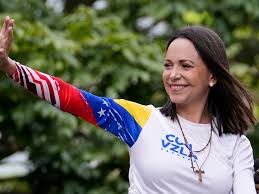 Ms Machado has been a key, unifying figure in a political opposition that was once deeply divided – an opposition that found common ground in the demand for free elections and representative government. This is precisely what lies at the heart of democracy: our shared willingness to defend the principles of popular rule, even though we disagree. At a time when democracy is under threat, it is more important than ever to defend this common ground.
Venezuela has evolved from a relatively democratic and prosperous country to a brutal, authoritarian state that is now suffering a humanitarian and economic crisis. Most Venezuelans live in deep poverty, even as the few at the top enrich themselves. The violent machinery of the state is directed against the country’s own citizens. Nearly 8 million people have left the country. The opposition has been systematically suppressed by means of election rigging, legal prosecution and imprisonment.
Venezuela’s authoritarian regime makes political work extremely difficult. As a founder of Súmate, an organisation devoted to democratic development, Ms Machado stood up for free and fair elections more than 20 years ago. As she said: “It was a choice of ballots over bullets.” In political office and in her service to organisations since then, Ms Machado has spoken out for judicial independence, human rights and popular representation. She has spent years working for the freedom of the Venezuelan people.
2 October
Regime change in America’s backyard?
(GZERO media) The Trump administration is moving closer to a direct confrontation with Venezuela, raising the possibility of what the president once vowed to avoid: another US-backed regime change.
Washington has already deployed warships, surveillance planes, and submarines to the Caribbean, and indicated the possibility of a strike inside Venezuela. US forces recently sank Venezuelan boats claiming drug smugglers were aboard, killing 17 people. At the same time, officials have branded Venezuelan President Nicolás Maduro a cartel boss, “fugitive of American justice,” and threatened to categorize his government as a “state sponsor of terror.”
Behind the scenes, senior officials are actively debating whether to escalate further. Secretary of State Marco Rubio, White House policy chief Stephen Miller, and CIA Director John Ratcliff are leading the charge for Maduro’s ouster. Their strategy appears to hinge on applying enough military pressure to trigger an internal rupture — splitting the regime and forcing the Venezuelan military to abandon its leader.
…a more probable outcome would be an initial transition from within the regime itself — perhaps a senior military figure replacing Maduro. But as Grais-Targow cautioned, “Even if Maduro is removed, the transition will be long, messy, and potentially violent. Deep mistrust between the opposition and the military makes a clean break unlikely.”
24 September
No President Should Have This Kind of Power
(NYT Editorial Board) Somewhere mingled in the foam and debris of the Caribbean Sea are the remains of at least 17 people who were killed this month by U.S. military forces on the orders of President Trump. They were aboard three speedboats that the Trump administration said were carrying drugs and smugglers from Venezuela.
Perhaps they were. Yet the administration has produced no evidence for its claims. And even if the allegations are correct, blowing up the boats is a lawless exercise in the use of deadly force.
With these attacks, Mr. Trump has ordered the summary execution of people who are not at war with the United States in any traditional sense of the term and who may not even have been committing the crime of which he accused them. It is a violation of legal due process that should alarm all Americans. It is even more extreme than his policy of sending migrants to a brutal prison in El Salvador, based on questionable claims that they belonged to Tren de Aragua and without any chance to contest the government’s claims. The United States, created in opposition to monarchy, should never become a country where the president can order the indefinite imprisonment or the unilateral killing of people merely because he has deemed them to be criminals.
15-20 September
U.S. Military Buildup in Caribbean Signals Broader Campaign Against Venezuela
Trump officials say the mission aims to disrupt the drug trade. But military officials and analysts say the real goal might be driving Venezuela’s president from power.
(NYT) As tensions in the Caribbean Sea have risen, the Pentagon has dispatched 10 F-35 stealth fighters to Puerto Rico to deter Venezuelan flyovers near U.S. ships and to be positioned should President Trump order airstrikes against targets in Venezuela.
The U.S. military strikes this month on three boats that Trump administration officials have asserted were smuggling drugs in the Caribbean Sea have cast a spotlight on the sizable naval armada and aerial fleet of spy aircraft the Pentagon has dispatched to the region in what it says is a counter-narcotics and counter-terrorism mission.
Military officials, diplomats and analysts say a main purpose of the force is to ratchet up pressure on Venezuela’s president, Nicolás Maduro, as top figures in the Trump administration call him an illegitimate leader and accuse him of directing the actions of criminal gangs and drug cartels.
Trump discloses U.S. targeted a third alleged drug boat from Venezuela
The president acknowledged the incident while delivering a warning to Venezuela’s president, Nicolás Maduro.
US military again targeted a boat allegedly carrying drugs from Venezuela, Trump says
(AP) — President Donald Trump said the U.S. military on Monday again targeted a boat allegedly carrying drugs from Venezuela, killing three aboard the vessel, and hinted that the military targeting of cartels could be further expanded.
The strike was carried out nearly two weeks after another military strike on what the Trump administration said was a drug-carrying speedboat from Venezuela that killed 11.
Speaking to reporters in the Oval Office later on Monday, Trump said he had been shown footage of the latest strike by Gen. Dan Caine, chairman of the Joint Chiefs of Staff.
Maduro Calls U.S. Attack on Boat ‘A Heinous Crime.’ Then Trump Announces Another.
The Venezuela leader, Nicolás Maduro, said that the Trump administration was trying to start a war in the Caribbean.
5 September
Trump sends 10 stealth fighter planes to Puerto Rico amid war on Caribbean drug cartels
Move comes after US accuses Venezuela of buzzing warship and a deadly US missile strike in Caribbean Sea
(The Guardian) Trump sends 10 stealth fighter planes to Puerto Rico amid war on Caribbean drug cartels
Move comes after US accuses Venezuela of buzzing warship and a deadly US missile strike in Caribbean Sea
Donald Trump is sending 10 F-35 fighter jets to Puerto Rico to bolster US military operations against drug cartels in the Caribbean region, it was reported on Friday.
It follows a deadly US missile strike on Tuesday on a boat in the Caribbean Sea that the Trump administration insisted was carrying 11 Venezuelan drug traffickers, and comments by the secretary of state, Marco Rubio, on Wednesday that such attacks “will happen again”.
In another development on Thursday, the US accused Venezuela of the “highly provocative move” of buzzing one of its warships in international waters.
The deployment of strike aircraft to Puerto Rico, first reported by Reuters, citing two sources briefed on the matter, is a sharp escalation of the US president’s crackdown on what he sees as a Venezuelan-led drug-trafficking menace in the region.
2-3 September
Ian Bremmer: Is the US about to invade Venezuela?
… The strike seems intended to make a point.
Analysts said the deployment was more a show of force than an antidrug strategy. Mr. Ramsey said that Mr. Trump, who campaigned on ending wars, was unlikely to attack Venezuela.
“This is less of a counternarcotics operation, more of a show of strength,” Mr. Ramsey said. “This is ultimately an attempt to saber-rattle and see what comes out of it.”
A run of legal and political escalations points to a bigger play. Over the last few weeks, the Trump administration designated Venezuelan cartels as terrorist organizations and Nicolás Maduro as their leader. It doubled the bounty on Maduro’s head to $50 million. It authorized the Defense Department to use force against cartels in Venezuela and Mexico. And it made a point of reiterating that the US does not recognize Maduro as a legitimate head of state protected by US law – a crucial step in creating legal cover to target him directly, if Trump so ordered. These moves happened before the flotilla started steaming south.
Add it all up and this reads like the opening act of a pressure campaign to unseat Maduro.
President Trump is usually…skeptical of regime change, but Secretary of State and national security adviser (and acting USAID Administrator, and acting Archivist) Marco Rubio has been pushing for a more active US intervention in Venezuela since his Senate days. For Rubio, whose worldview was shaped by Miami Cuban exile politics, hitting Caracas is about more than drugs, crime, and illegal migrants – it’s about taking down what he sees as Cuba’s oil-subsidized proxy and the first step in cleaning house across Latin America.
Is Venezuela Flooding the U.S. With Drugs? Here’s What to Know.
The Trump administration says Venezuela is sending vast amounts of cocaine to the United States. Venezuela’s role in the drug trade is overstated, experts say.
The United States has deployed several Navy ships and thousands of troops near Venezuelan waters. The Trump administration says the military buildup is intended to target Venezuelan drug shipments to the United States.
U.S. officials have said that Venezuelan cocaine shipments are contributing to overdose deaths in the United States and that cocaine is often laced with fentanyl. They accuse the country’s autocratic leader, Nicolás Maduro, of overseeing a narcotics cartel.
President Trump signed a still-secret directive in July instructing the Pentagon to use military force against some Latin American drug cartels that his administration has labeled “terrorist” organizations
Trump Says U.S. Attacked Boat Carrying Venezuelan Gang Members, Killing 11
The vessel was transporting illegal narcotics through international waters to the United States, the president said.
“Earlier this morning, on my Orders, U.S. Military Forces conducted a kinetic strike against positively identified Tren de Aragua Narco terrorists,” Mr. Trump wrote. He said the strike “occurred while the terrorists were at sea in International waters transporting illegal narcotics, heading to the United States.”
13 January
Marco Rubio’s first headache
(Politico) Among the first crises he’ll face — the political mess in Venezuela, a hemispheric problem spot that he’s already well-acquainted with.
8-10 January
Venezuela’s Maduro takes new oath amid protests and international rebuke
(AP) — Venezuelan President Nicolás Maduro was sworn in for a new term on Friday, extending his increasingly repressive rule in the face of renewed protests and rebukes from the United States and others who believe he stole last year’s vote.
Venezuela’s legislative palace, where he was sworn in and delivered a fiery speech, was heavily guarded by security forces who have become Maduro’s main hold on power since last summer’s disputed election. Crowds of people, many sporting pro-Maduro T-shirts, gathered in adjacent streets and a nearby plaza.
Venezuela’s opposition leader defies Maduro to lead protests that end in confusing arrest claims
(AP) — Venezuela opposition leader María Corina Machado’s aides said she was detained Thursday, followed moments later by official denials of her arrest, in a confusing episode that capped a day of protests seeking to block President Nicolás Maduro from clinging to power.
It remained unclear what exactly happened after Machado bid farewell to hundreds of supporters, hopped on a motorcycle and raced with her security convoy down a main Caracas avenue.
At 3:21 p.m. local time, Machado’s press team said in a social media post that security forces “violently intercepted” her convoy. Her aides later told The Associated Press that she had been detained, and international condemnation poured in from leaders in Latin America and beyond, demanding her release.
Venezuela’s political newcomer Edmundo González says it’s his turn to rule
(AP) — Edmundo González has become a beacon of hope for millions of Venezuelans. They want to call him president. He believes he won that office at the ballot box last year. The government of President Nicolás Maduro says he did not.
A virtually unknown grandfather less than a year ago, he now has heard tens of thousands of people chant his name as loudly as they screamed “Freedom! Freedom!” at rallies across the South American country.
But González has paid the price for challenging the 25-year rule of the United Socialist Party of Venezuela. Under pressure, he has gone into exile. And on Tuesday, he said son-in-law Rafael Tudares had been kidnapped in the capital, Caracas.
2024
19 November
US recognizes Edmundo González Urrutia as Venezuelan ‘president-elect’
Antony Blinken makes statement months after President Nicolás Maduro claimed to have won July contest
(The Guardian) Joe Biden’s administration had previously said González earned the most votes in the disputed 28 July election, but fell short of acknowledging him as president-elect.
“The Venezuelan people spoke resoundingly on July 28 and made [González] the president-elect,” wrote Blinken.
González fled to exile in Spain earlier this month, later telling reporters that he had been coerced into signing a letter recognizing Maduro as the winner of the disputed election as a condition for letting him leave Venezuela.
Venezuela’s national electoral council, which is stacked with Maduro loyalists, had declared Maduro the election winner hours after polls closed. Unlike previous presidential elections, electoral authorities did not provide detailed vote counts.
But the opposition coalition collected tally sheets from 80% of the nation’s electronic voting machines and posted them online. González and opposition leader María Corina Machado said the voting records showed the former diplomat won the election with twice as many votes as Maduro.
How Venezuela’s opposition proved its election win: ‘A brilliant political move’
6-9 September
Anti-Maduro campaign ‘stronger than ever’ after Venezuelan election, says Machado
Opposition leader María Corina Machado said exile of key figure Edmundo González ‘changes absolutely nothing’
Venezuela opposition candidate leaves for Spain
Venezuela’s vice president says that former presidential opposition candidate Edmundo Gonzalez has left the country
Venezuela claims embassy used to plan assassination attempts
Brazil insists on defending Argentine interests until new state is chosen
Brazil and Argentina urge Venezuela to respect the Vienna Convention on Diplomatic Relations
Argentina’s Foreign Ministry asks ICC to issue arrest warrant against Maduro
(Reuters) – Venezuela’s former presidential opposition candidate Edmundo Gonzalez has left for Spain in the wake of the South American country’s contested election, Venezuelan and Spanish officials said on Saturday night after a day of rising diplomatic tensions.
Venezuela revokes Brazil’s custody of Argentine embassy housing Maduro opponents
Opponents holed up for months in the Argentine ambassador’s residence say the building has been surrounded by security forces
… In March, six people sought asylum in the Argentine embassy in Caracas after a prosecutor ordered their arrest on charges including conspiracy. Opposition leader Maria Corina Machado has denied the allegations against her collaborators.
Saturday’s move from Venezuela is the latest burst of friction between the countries. Argentina’s president has been among those leading the charge against Maduro over alleged attempts to steal July’s presidential election.
Venezuela’s opposition leader calls for global movement to ‘rescue’ country
María Corina Machado wants struggle against Maduro’s ‘criminal tyranny’ to mirror anti-apartheid movement
4 September
Ian Bremmer: Maduro won’t go
Earlier this week, the US Justice Department seized the airplane used by Venezuelan strongman Nicolás Maduro, his equivalent of Air Force One. It’s the latest signal that the Biden administration remains furious at Maduro for stealing another of his country’s elections — and that it needs some way of expressing that anger. Will this latest US move undermine Maduro’s hold on power? Don’t hold your breath.
Background: US presidents have tried for years to force Maduro, in power since 2013, to hold free and fair national elections in Venezuela. Maduro has refused because he knows he would lose any contest that isn’t rigged in his favor. In 2018’s presidential election, he manipulated the vote to a degree that made international headlines, and the US and more than 50 other countries recognized the president of the National Assembly, opposition leader Juan Guaidó, as the country’s rightful leader. It made no difference; Maduro pressed on and remained in power.
Under President Donald Trump in March 2020, the US Justice Department charged Maduro and 14 of his political allies with narco-terrorism, drug trafficking, and corruption in hopes of loosening his grip. No dice.
… To show just how much power he still commands, Maduro decreed this week that this year’s celebration of Christmas will begin on Oct. 1. Seriously.
The US and Venezuela’s neighbors, particularly Colombia, have a clear interest in restoring credibility to Venezuela’s politics, in part because both countries and the region have absorbed millions of refugees fleeing political repression or simply looking for brighter economic prospects than Venezuela’s basket-case, sanction-plagued economy can provide. …
Maduro will continue to resist any deal that pushes him from power. The US has reportedly offered him amnesty if he agrees to step down. Some in Congress want a return to the Trump administration’s tougher approach. A group of bipartisan lawmakers led by Sens. Jim Risch (R-ID), Rick Scott (R-FL), and Bill Cassidy (R-LA) appear ready to present the so-called “VALOR Act,” a bill co-sponsored by Democrats including Rep. Debbie Wasserman Schultz (D-FL) and Sen. Michael Bennet (D-CO). The bill would significantly ratchet up US sanctions against Venezuela.
Brazil, Colombia, and Mexico have also tried to pressure Maduro by calling for the release of detailed voter tallies and an election audit conducted by some institution other than Venezuela’s Supreme Court, which remains fully under Maduro’s thumb.
But the Venezuelan leader still has firm backing from the country’s military and security forces, which profit from his rule. …
Human rights group implicates Venezuelan security forces in killings during post-election protests
(AP) — A global human rights watchdog on Wednesday implicated Venezuelan security forces and pro-government armed groups in killings that occurred during the protests that followed the country’s disputed July presidential election.
Human Rights Watch, in a report detailing repressive measures the government unleashed after the vote, asserted that credible evidence gathered and analyzed by researchers, forensic pathologists and arms experts ties Venezuela’s national guard and national police to some of the 24 killings that took place as people protested the outcome of the election. The organization also concluded that violent gangs aligned with the ruling party also “appear to be responsible” in some of the deaths.
Exclusive: US seizes Venezuela President Nicolas Maduro’s airplane in the Dominican Republic
(CNN) The United States has seized Venezuela President Nicolas Maduro’s airplane after determining that its acquisition was in violation of US sanctions, among other criminal issues. The US flew the aircraft to Florida on Monday, according to two US officials.
It’s the latest development in what has long been a frosty relationship between the US and Venezuela, and its seizure in the Dominican Republic marks an escalation as the US continues to investigate what it regards as corrupt practices by Venezuela’s government.
“This sends a message all the way up to the top,” one of the US officials told CNN. “Seizing the foreign head of state’s plane is unheard-of for criminal matters. We’re sending a clear message here that no one is above the law, no one is above the reach of US sanctions.”
2-3 September
Venezuelan opposition candidate Edmundo Gonzalez Urrutia has not sought asylum despite an arrest warrant over his claim of winning the July presidential election, his lawyer said. The prosecutor’s office accused him of “serious crimes.” Gonzalez Urrutia, in hiding since July 28, has ignored three summonses from prosecutors.
Maduro Orders Arrest of Rival to Quell Venezuela Dissent
Regime wants González arrested for snubbing probe into vote
Ex-diplomat has been in hiding amid post-election crackdown
Venezuela issues arrest warrant for opposition leader Gonzalez, AG says
Opposition claims election fraud, demands publication of full tallies
U.S. drafts sanctions list for Venezuelan officials post-election
Gonzalez accused of usurpation of functions, falsification of public documents, and conspiracy among other charges
Warrant against Gonzalez amounts to major escalation in crackdown of opposition
US seizes Maduro’s plane in Dominican Republic
(Reuters) – Venezuela’s attorney general’s office said on Monday a court has issued an arrest warrant for opposition leader Edmundo Gonzalez, accusing him of conspiracy and other crimes amid a dispute over whether he or President Nicolas Maduro won a July election.
Attorney general Tarek Saab shared a photo of the warrant with Reuters via a message on the application Telegram.
The issue of an arrest warrant against Gonzalez would amount to a major escalation in Maduro’s government’s crackdown against the opposition following the disputed election.
Venezuela’s Maduro condemns ‘piracy’ after US seizes his ‘smuggled’ plane
“The Justice Department seized an aircraft we allege was illegally purchased for $13 million through a shell company and smuggled out of the United States for use by Nicolas Maduro and his cronies,” Attorney General Merrick Garland said in a statement.