Donald Trump Wars & “Board of Peace” March 2026-
Written by Diana Thebaud Nicholson // July 16, 2026 // Geopolitics, U.S. // No comments
From Iran to Venezuela, Here Are the Countries Trump Has Ordered Strikes On in His Second Term
(TIME) President Donald Trump ran in 2024 on a campaign that swore to avoid dragging the U.S. into foreign wars, instead focusing on home prosperity. Earlier this year, the White House referred to him as the “President of Peace.”
But that title is being scrutinized following the U.S. decision to strike Iran over the weekend (28 February).
Here are the countries and areas Trump has ordered strikes on in his second term:
2025
Somalia
On Feb. 1, the U.S. carried out airstrikes against Islamic State operatives in Somalia.
Defense Secretary Pete Hegseth said the strikes were directed by Trump and coordinated with Somalia’s government. The Pentagon assessed that “multiple” operatives were killed and no civilians were harmed. Trump later said that a senior IS planner and recruits were targeted.
Iraq
On March 13, U.S.-led coalition forces, alongside Iraqi national intelligence services and Security Forces, killed a senior Islamic State leader in a “precision airstrike” in Iraq’s western Al Anbar province, according to U.S. Central Command.
Yemen
Between March and May, the U.S. launched naval and airstrikes against Yemen’s Houthi rebels in what was codenamed Operation Rough Rider, the largest U.S. military operation in the Middle East during Trump’s second term at that time.
Iran
In early June, amid negotiations over nuclear capabilities, Israel began striking Iranian targets. On June 22, the U.S. joined the campaign, striking three key nuclear facilities at Fordow, Natanz, and Isfahan in Operation Midnight Hammer, using B‑2 bombers and submarine-launched Tomahawks.
Caribbean Sea and Pacific Ocean
On Sept. 2, the U.S. carried out its first strike against what Trump said was a drug-carrying vessel that departed from Venezuela and was operated by Tren de Aragua.
The strikes later expanded to routes in nearby Latin American waters, including the eastern Pacific off Central America.
Syria
On Dec. 19, the U.S. carried out large-scale strikes against Islamic State targets in Syria under Operation Hawkeye Strike. U.S. and Jordanian partner forces fired more than 100 precision munitions at over 70 targets in multiple locations across central Syria.
On Jan. 10, U.S. and partner forces conducted further large-scale strikes against multiple ISIS targets across Syria. Later, on Jan. 16 CENTCOM conducted a strike in northwest Syria that resulted in the death of Bilal Hasan al-Jasim, a leader affiliated with Al-Qaeda.
Nigeria
Trump initially deployed 100 U.S. military personnel to Nigeria to train local forces, threatening strikes if the government did not address what he described as a “genocide” of Christians. On Dec. 25, U.S. Africa Command, in coordination with Nigerian authorities, conducted strikes against ISIS operatives in Sokoto State.
2026
Venezuela
On Jan. 3, American special operations forces carried out a pre-dawn raid in Caracas, bombing the capital and detaining Venezuelan President Nicolás Maduro
Iran —Third Gulf War
16 July
In Iran, Trump Risks Another American ‘Forever War’
President Trump, who promised to “end wars,” not start them, may have fallen into a familiar presidential trap.
(NYT) No one starts a war expecting it to last forever.
Yet, since Vietnam, American presidents have repeatedly gotten into conflicts that seem like they could last forever, at least until the next president — or the one after that — decides that the expense and political pain are not worth it, declares victory and goes home.
On Iran, President Trump may have fallen into the same trap.
… Aaron David Miller, a senior fellow at the Carnegie Endowment for International Peace, said Mr. Trump, urged by Israel, has also inserted himself in a parallel “forever war” — the one between Israel and Iran, which is being played out with Iran’s proxies in Lebanon, the Palestinian territories and Yemen.
Mr. Trump still has the ability to sell this unpopular war to his base as a victory of some kind and go home. But to the surprise of many, he seems to be doubling down, albeit with no clear path to a diplomatic settlement. And his commitment to keep the Strait of Hormuz open, while Iran insists on maintaining control, could mean a very long American military engagement, even with the help of allies.
8 July
As Iran Cease-Fire Frays, Trump Faces a Muddled War and Unpalatable Options
The president appears to be confronting the consequences of a cease-fire deal cobbled together in haste, with little movement toward resolving the key issues driving the conflict.
David E. Sanger, White House and National Security Correspondent
(NYT) Just two weeks ago, opening the Great American State Fair, President Trump triumphantly declared: “For the first time in 3,000 years, we are going to have peace in the Middle East.”
It was typical bravado for Mr. Trump. But the “peace” he was celebrating — the cease-fire with Iran that on Wednesday he declared “over” after less than a month — was already beginning to unravel. The result was perhaps predictable for a 14-paragraph memorandum of understanding that skirted major issues and was hastily assembled so Mr. Trump could declare he had reached a deal, any deal.
Now Mr. Trump appears to be confronting the consequences of his haste, and of his assumption, born of his time in the real estate business, that his adversary would prize economic benefits over the revolutionary ideology that has driven its politics since the 1979 Iranian revolution.
27 June
Of Stoicism and Stupor – The Wars of Marcus Aurelius and Donald Trump
Timothy Snyder
… The American leaders had no idea of who they were or what they wanted, aside from the satisfaction of their emotional needs by the killing of others. They were unable to imagine that people on the other side might have ideas about their own interests and plans for their own behavior. The could not see the world, even in its plainest representation as geography; whereas Marcus exploited a bend in the Danube River to tactical advantage to win a battle; Trump chose to ignore the physical limit the Straits of Hormuz can place on world trade. As soon as the war began, the Iranians did the obvious: they responded to American long-range attacks with the same; and they blocked the Straits.
Because the Americans were operating without a sense of themselves, of the world, or other people, this came as a surprise. Marcus Aurelius offers this mild comment: “How absurd — and a complete stranger to the world– is the man surprised at any aspect of his experience in life!”
20 June
Nicholas Kristof: Trump Was Right. The War Ended With a Surrender.
President Trump declared in March that a deal to end his war with Iran would require “unconditional surrender,” but that wasn’t quite right. The preliminary agreement he just reached with the Iranian regime was more like a conditional surrender — by the United States.
… The criticisms are correct: The Iran deal is a major setback. It gives immediate relief to Iran, including the prompt unfreezing of billions of dollars of Iranian assets and later a $300 billion fund to help rebuild Iran. And it appears to open the door to Iran gaining at least partial control over the Strait of Hormuz, with the ability, 60 days hence, to charge fees of ships transiting the strait. …
Yet these denunciations miss the most important point. Trump’s fundamental mistake was not ending the war but getting into it in the first place.
16 June
Trump Does Not Understand the War He Lost
The president’s comments at the G7 summit revealed that he doesn’t understand the war he started—or the words that come out of his own mouth.
By Tom Nichols
(The Atlantic) Donald Trump arrived in France yesterday for this morning’s G7 summit and promptly confirmed America’s capitulation to Iran. Instead of merely repeating the outlines of what looks to be a terrible peace deal, however, Trump made a series of statements so bizarre, even by his usual standards, that they raise the question of whether the president still understands the words that come out of his own mouth.
… Trump’s description of the current regime in Tehran as a bunch of swell guys was brewed in a heavy-duty vat of wishful thinking. It’s an extreme version of Trump’s tendency, when he’s been outplayed by powerful enemies, to describe his opponents as basically reasonable people. …
In the past, Trump has tried to conjure new circumstances by speaking them aloud and attempting to wish them into existence. His tired garble in France, however, is something different. It suggests that Trump, more than ever, is unable to fathom what’s happening in the world around him and has been reduced to turning all of his previous statements upside down: A regime that was once the epitome of evil is now a reasonable partner; nuclear material that once represented an existential threat to America might now sit in Iran forever; Syria and Iran and Israel and Lebanon will now do things that they would never do, just because he wants them to.
None of this makes any sense, except as desperate rationalizations from a man who cannot face facts and admit defeat. Trump has always had a tenuous relationship with the truth, but evidence is mounting that on the most important questions of war and peace, the president of the United States seems to be losing his grip on reality itself.
Heather Cox Richardson Letters from an American June 15, 2026
… It appears that Trump badly wanted to sign an agreement with Iran yesterday on his birthday before taking off today for Europe to attend the G7. … Rumors about what was included in negotiations swirled all weekend.
While Trump is boasting that the agreement is a triumph, no one has yet seen any terms, and the agreement that is scheduled to be signed in Geneva, Switzerland, on Friday appears to be a memorandum of understanding (MOU) for a 60-day ceasefire for continued negotiations, not a final agreement.
Zack Stanton of MS NOW notes the ways in which Trump’s version of the MOU and what Iranian officials say about it are quite different. Trump says the Strait of Hormuz will be “permanently toll-free” while Iranian officials say they will regulate the strait along with Oman.
Trump is trying to cover over the release of $24 billion in frozen Iranian assets by saying “no money will exchange hands.” But this morning, Vice President J.D. Vance told CBS that in addition to that $24 billion, Iran will also have access to $300 billion in funds for reconstruction.
Discussion of Iran’s nuclear ambitions will be put off for later.
In his remarks about the MOU yesterday, Trump thanked Russia’s president Vladimir Putin and China’s leader Xi Jinping for their help.
Trump Winds Down the War He Started With Goals Unmet
While the president says the agreement with Iran would open the Strait of Hormuz and provide economic relief, the country’s nuclear program is still a subject for negotiation.
(NYT) Almost immediately after striking a deal with Iran, President Trump appeared eager to take a victory lap.
He trumpeted that the agreement would open the Strait of Hormuz, a vital waterway for the world’s energy supplies whose stalled ship traffic has rattled the global economy. He told The New York Times that his efforts had saved Israel from nuclear extinction and made the Middle East safer. It all gave him a key win as he traveled to France for the Group of 7 summit, where he will meet with European leaders who have criticized his approach to the war.
Despite Mr. Trump’s grandiose claims, the agreement has not yet achieved the core goals he laid out three months ago for launching U.S.-Israeli war against Iran.
Back then, Mr. Trump said the United States intended to “annihilate” Iran’s military capabilities, abolish its nuclear ambitions, topple its theocratic leadership and liberate its people, whom he encouraged to take over their government when the fighting had stopped. Just one week after the strikes started, he said Iran’s only path to a deal was an “unconditional surrender.”
8 June
Max Boot: Trump struggles to end an Iran war he never should have started
(WaPo Opinion) On May 23, President Donald Trump said a deal to end the war with Iran was almost finalized and would be “announced shortly.” Yet more than two weeks later no deal has been unveiled, and U.S. and Iranian forces continue to exchange fire regularly. Last week, an Iranian drone attack heavily damaged Kuwait’s international airport. On Sunday, Iran launched ballistic missiles at Israel, and Israel struck back. The Strait of Hormuz remains closed for all but a trickle of traffic. …
All the options are bad, and the president has no one but himself to blame.
Because Trump doesn’t want to militarily escalate, and he doesn’t want to make costly concessions, he is sticking with the status quo for now, while retreating at times into the realm of fantasy. He has posted three times the same social media post imagining Iran signing “Documents of Surrender” and yet the “Dumacrats and Media” not giving him any credit for this “Masterful and Brilliant Victory.”
Trump claims he ‘didn’t guarantee’ no US wars. Here’s what he’s actually said
US president for years has repeatedly suggested – and said outright – that he would not take the country to war
(The Guardian) Donald Trump has forcefully denied he ever promised not to draw the US into war, having spent years pledging to avoid doing just that.
The US president’s own biography on the White House website credits him with “putting a stop to endless wars” – raising questions about the US-Israel war on Iran, which he launched, with no end currently in sight.
NBC’s Kristen Welker pressed Trump in a Meet the Press interview that aired Sunday about his previous pledges to refrain from starting wars.
“Mr President, in your first term, you held to that promise, and it was so fundamental to who you were as a candidate, to a first-term president,” she said. “What changed? Because you insisted no new wars.”
“I didn’t guarantee no war,” Trump interjected. “Why would I have built the strongest military in the world? I built our military.”
His response sharply contradicts previous comments he has made over the years. …
31 May
Trump Hits the Stalemate Phase of His International Interventions, and It Stings
In Ukraine, Gaza and now Iran, President Trump’s early declarations of easy wins have given way to harsh reality.
David E. Sanger
President Trump likes his military and diplomatic victories quick, clean and decisive…. But now, Mr. Trump has hit the stalemate phase of his presidency.
The war with Iran is clearly at that stage. … Even if commerce now resumes across the strait under a memorandum of understanding still under negotiation, it will still leave the future of Iran’s nuclear and missile programs exactly where they were in February: stuck in a further negotiation that the administration insists will be “time limited,” probably to 60 days. But the Iranians sense Mr. Trump’s deep reluctance to restart combat operations that are deeply unpopular in the United States, and most Iran experts say they expect Tehran to try to stretch the negotiations for months or years — as they have with past administrations.
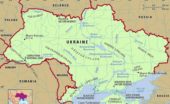
Then there is the Ukraine war, a conflict in its fifth year that Mr. Trump famously boasted he would end in 24 hours after taking office. Sixteen months after he was sworn in, he rarely mentions the war anymore, and Secretary of State Marco Rubio recently complained that he was tired of wasting time in endless negotiations, suggesting that he would be perfectly happy if some other country wanted to step in and play that role.
For their part, the Russians have quietly made clear that they are tired of periodic visits from the president’s special envoy Steve Witkoff and Mr. Trump’s son-in-law Jared Kushner, according to people familiar with the negotiations. They say they want a stable, diplomatic process, with working groups and regular meetings. They also want an American ambassador to Russia — a job that has been open, astoundingly, for nearly a year.
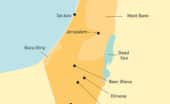
And there is Gaza. When Mr. Trump flew to Israel to celebrate the release of the last of the living hostages from the Oct. 7, 2023, terror attack, he enthused about a 20-point plan that started with the disarming of Hamas, the creation of an international stabilization force and, ultimately, rebuilding Gaza into a gleaming territory of glass office towers and seaside resorts. Eight months after that trip, Hamas has still not disarmed,
27 May
Pentagon puts building blocks in place for Cuba invasion
The Navy’s presence in the Caribbean has not reduced despite the Iran war.
(Politico) The Pentagon has spent months positioning the troops and weapons needed for the U.S. to launch a military attack on Cuba — all it needs is a final go-ahead from Donald Trump.
The president has floated an invasion of the island after economic and political pressure failed to topple the Communist government. But the Navy’s built-up presence in the region — the largest in the world outside the Middle East — would allow the U.S. to act immediately.
These strategically placed assets set the table for military action, from a capture of Havana’s leadership much like the seizure of former Venezuelan President Nicolas Maduro, to a series of precision strikes. And they open the possibility that the U.S. throws itself into the third international conflict of the Trump administration.
5 May
Trump’s Ukraine Policy Is Succeeding While His Iran Policy Flails
Ross Douthat
(NYT) One of the many ironies of Donald Trump’s war against Iran is that only a year ago, most of the president’s critics assumed that any second-term crisis for the American empire would be caused not by reckless war-making, but by appeasement and retreat. In particular, the Trumpian push for peace between Russia and Ukraine was cast as the great betrayal, craven and sinister in equal measure, that would yield disaster for Europe and disgrace for the United States.
Yet today, as Trump struggles to find an exit strategy from his Middle Eastern war of choice, his administration’s policy toward Ukraine looks like everything his Iran policy is not: an effective rebalancing for a multipolar world, in which a major rival has been contained and weakened with a reduced American commitment, and our regional allies have actually substituted for our overstretched capacities rather than trying to force us to stretch too far on their behalf.
…the contrast with the Iran conflict, and the role our alliances have played in the Middle Eastern war. Here Trump let himself be talked into a high-risk gambit by one ally, Israel, while initially reassuring our allies in Europe that we wouldn’t need help from them, and then swinging around to rage that they weren’t helping us enough. Meanwhile, our Persian Gulf allies, who grew rich under our military umbrella, expect us to finish what we started without being able to supply much meaningful military support in their own backyard.
The ultimate outcomes of the Iran war and the Ukrainian war are both still in the fog. But with Ukraine, you can at least glimpse the shape of a security architecture that could outlast Trump and be stabilized by his successors. In the Middle East, by contrast, everything’s still on America’s shoulders, and whether as an overburdened Atlas or a tied-down Gulliver, there’s no clear path to burden sharing and no easy way for us to pivot out.
2 May
As the war in Iran continues into its third month—and cease-fire negotiations between the United States and Iran stall—I’ve been rereading some of our best essays on the conflict, including this one by Richard Fontaine. In it, he lays out how the Trump administration’s approach to war strays from the U.S. doctrine developed during the Gulf War in the early 1990s—the idea that “force should be employed only as a last resort” and “should proceed in pursuit of a clear objective, with a clear exit strategy, and with public support.” Fontaine makes a compelling, if counterintuitive, case that there might be merit in Trump’s embrace of “flexibility and ambiguity.”
Dan Kurtz-Phelan
Editor, Foreign Affairs
Trump’s Way of War
Iran, Venezuela, and the End of the Powell Doctrine
Richard Fontaine
(Foreign Affairs)…each conflict began suddenly and followed an unpredictable course. Rather than lay out a case for each war, the president often insisted he hoped to avoid it. His administration put a priority on surprise, attesting, for example, that the Caribbean military buildup was to stop drug boats, not to prepare for a direct regime change operation in Venezuela. Congress was largely sidelined. Iran today presents an even more ambitious regime change operation, but in [the] nearly two-hour State of the Union address, Trump talked about it in only a few sentences. The scale and stakes of the war make the administration’s seeming disregard for public debate all the more remarkable.
The Trump administration has also avoided articulating clear objectives for its use of force. When announcing that war with Iran had begun, the president said that the objective was “to defend the American people by eliminating imminent threats from the Iranian regime,” even though Tehran was neither enriching uranium nor in possession of missiles capable of reaching the United States. …
Where the Powell Doctrine calls for clarity, Trump instead prizes flexibility.
By claiming multiple and often vague objectives, the president retains the ability to stop the fighting without admitting defeat. This, rather than obvious victory, is his exit strategy.
1 May
Jared Kushner, Steve Witkoff and the Profitable Business of Peace
(NYT) … Their approach to peacemaking is abundantly evident in the settlements they have brokered thus far. The October cease-fire between Israel and Hamas opened the door to Kushner’s aspiration to build a shiny special economic zone where there are now 60 million tons of rubble — with human remains and unexploded ordnance trapped inside. In this vision, the economic zone will house data centers, skyscrapers and advanced manufacturing and run on cryptocurrency. Their draft proposal for a negotiated settlement between Russia and Ukraine included a provision that the United States would receive “50 percent of profits” from the “venture” of rebuilding Ukraine’s destroyed infrastructure. Their view seems to be that peace is an asset to be leveraged and maximized.
On the sidelines of the inaugural meeting of the Board of Peace in February, Witkoff announced an agreement between the United States and Pakistan to redevelop the Roosevelt Hotel in New York, just weeks after the Pakistani government signed a deal with a company affiliated with World Liberty Financial, the crypto firm run by Witkoff’s and Trump’s sons. In the months since, Pakistan has become one of the primary mediators between the United States and Iran.
…Kushner has continued to raise funds for his investment firm, Affinity Partners, seeking $5 billion from Middle Eastern governments even as he participates in peace talks in the region. Saudi Arabia, one of his largest investment partners, urged the Trump administration to continue fighting Iran until the regime is destroyed.
The creeping privatization of both war and peace has been underway for some time. But Trump has pushed this trend to its logical conclusion: His administration has turned the delicate practice of peacemaking, previously handled largely by experienced diplomats, mediators and specialists, into a business for a select few stakeholders who are bound together by a thicket of financial affiliations and conflicts of interest.
28 March
Wild Ultimatums and ‘Bombing Our Little Hearts Out’: A Portrait of Trump at War
President Trump has vacillated between boasting about U.S. military superiority and deep frustration that his war of choice is not always having the desired effects.
10 March
Iran war threatens Board of Peace
With the chief Gaza negotiators handling Iran and Ukraine, Gaza appears to be falling off the radar.
When the Board of Peace was announced as part of the ceasefire the U.S. secured in October between Israel and Hamas, backed up with U.N. Security Council approval, it was meant to set the framework for rebuilding Gaza — and much more.
The charter of the board, according to a leaked copy, laid out a mission to build “peace in areas affected or threatened by conflict.” And, with the close attention of Witkoff and Kushner, Israel and Hamas exchanged hostages and prisoners, and Israel opened the Rafah border crossing between Egypt and Gaza.
5 March
UAE billionaire Habtoor openly lambasts Trump over Iran war
The Emirati businessman condemned the US president, a former business partner, for his “dangerous” attack on Iran and asked whether he had stopped to consider the collateral damage.
(Al-Monitor) Khalaf Ahmad Al Habtoor, the founding chairman of global conglomerate Al Habtoor Group, has become the first high-profile Middle Eastern businessman to publicly criticize US President Donald Trump for waging a war with Iran that has upended the whole region.
In a Thursday post on X, Habtoor condemned the president’s decision to strike Iran as “dangerous” and asked whether he calculated the likely collateral damage before doing so.
“You have placed the countries of the Gulf Cooperation Council and the Arab countries at the heart of a danger they did not choose,” Habtoor said. “Thank God, we are strong and capable of defending ourselves, and we have armies and defenses that protect our homelands, but the question remains: Who gave you permission to turn our region into a battlefield?” He accused the US and Israel of starting the war “before the ink has dried” on the Board of Peace initiative launched by Trump in January.
Habtoor said that much of the funding for the Board of Peace came from Middle Eastern countries, including the Gulf states, which “contributed billions of dollars on the basis of supporting stability and development…And these countries have the right to ask today: Where did this money go? And are we funding peace initiatives or funding a war that exposes us to danger?”
Gulf states Bahrain, Qatar, Saudi Arabia and the United Arab Emirates are all permanent members.
3 March
How Trump Decided to Go to War
President Trump’s embrace of military action in Iran was spurred by an Israeli leader determined to end diplomatic negotiations. Few of the president’s advisers voiced opposition.
(NYT) Prime Minister Benjamin Netanyahu of Israel walked into the Oval Office on the morning of Feb. 11, determined to keep the American president on the path to war.
For weeks, the United States and Israel had been secretly discussing a military offensive against Iran. But Trump administration officials had recently begun negotiating with the Iranians over the future of their nuclear program, and the Israeli leader wanted to make sure that the new diplomatic effort did not undermine the plans.
Attacks on Iran Heighten Fears in Cuba, Already Under U.S. Pressure
Many Cubans are wondering if the Trump administration plans to target their country’s Communist government next.