Wednesday Night # 2316
Written by Diana Thebaud Nicholson // August 5, 2026 // Wednesday Nights // No comments
Lloyd Robertson has died. He delivered the news to Canadians in an authoritative and unflappable manner for more than 40 years as anchor for the flagship news programs of CTV and CBC. Sandy Rinaldo, for many years his co-anchor, called him the Walter Cronkite of Canada.
At CTV, Robertson helped lead coverage of 11 federal elections, three Canadian-hosted Olympic Games and two Quebec referendums, as well as tragedies like the 1985 Air India bombing, 1989 Montreal massacre and the Sept. 11 attacks. He also helped share inspiring stories such as Terry Fox’s Marathon of Hope.
U.S.-Iran
Iran Says It Is Nearing Final Agreement With Oman on Strait of Hormuz
The agreement on an acceptable route for ships to pass through the strait would effectively ratify Tehran’s control over the crucial waterway.
Meanwhile, Reuters Global Foreign Policy Editor Samia Nakhoul writes that Iran is betting it can outlast Washington by turning the region’s shipping lanes and energy infrastructure into pressure points that steadily raise the cost of confrontation. Gulf officials and analysts say the goal is to convince the United States and its allies that containing the crisis is more costly than accommodating Iran’s demands over the Strait of Hormuz.
If that strategy works, it could leave Iran strengthened rather than weakened by the conflict. It’s dangerous to make predictions, of course, and this war could turn out in multiple different ways. But the way the war is going – including its impact on the gas price – does speak to the credibility of the U.S. President. That will matter when American voters cast their ballots in midterm elections in November. How Iran is widening its pressure campaign to force US concessions – See Long reads
Lebanon
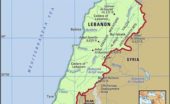
August 4th was the sixth anniversary of the deadly blast at Beirut port in which our dear friend Joumane was gravely injured. It seems that finally the inquiry has been completed and perhaps one day, those responsible will be brought to justice. Over the intervening years, the country has endured deadly skirmishes between Hezbollah and Israel. This week, Israel and Lebanon are meeting in Rome for their seventh round of diplomatic talks, the latest attempt to turn a shaky ceasefire into something more permanent after months of fighting in Lebanon have left over 4,000 dead and over a million displaced.
Last Wednesday we were so focused on the FIFA turmoil (see below) and the Fauci congressional hearings that we did not mention the news of the Cockroach Janta party protest whose victory is predicted to cause trouble ahead for Modi.
India
Devesh Kapur, Professor of South Asian Studies at Johns Hopkins University’s Paul H. Nitze School of Advanced International Studies, explains in The Painful Incompetence of the Indian State the cause of the protests; their immediate and probable long-term effects. (See Long reads)
Thanks to Peter Frise for pointing to Historian Peter Frankopan On Iran and Ukraine (YouTube); also on Bloomberg ‘Powerful Men Often Miscalculate’ The wars in Ukraine and the Middle East are often treated as separate crises. Peter Frankopan, author of The Silk Roads and The Earth Transformed, sees them as part of the same story: one in which powerful nations repeatedly misjudge weaker rivals and middle powers are gaining influence. The Oxford historian has spent his career looking at undercurrents to make sense of our world, and argues that while old assumptions about global power are breaking down, predictions about US decline are wrong. (see Long reads for links to both)
U.S. Government & Governance
In a major victory for the Democrats’ progressive wing, former public health official Dr. Abdul El-Sayed has won the tight Michigan Senate Primary race against centrist Representative Haley Stevens, who was backed by the party establishment.
The seat is pivotal to Democrats’ chances of flipping the Senate and El-Sayed will face the challenge of uniting a divided Democratic base after a bruising primary.
We hope Byron will be with us to analyze reactions.
Are you following the sleaze of the Todd Blanche confirmation hearings?
Heather Cox Richardson: An Unconscionable Deal -Just before midnight last night [2 August], news broke that Acting Attorney General Todd Blanche had rescinded the order of May 18, 2026, establishing a $1.776 billion slush fund for those who claimed that the Department of Justice, under former President Joe Biden, had persecuted them.
The fund was widely perceived to be a way to pay off those convicted of crimes related to their attempt to overturn the results of the 2020 presidential election. What Blanche’s order did not do was to change the terms of the non-prosecution order, providing that the Department of Justice would not prosecute Trump, his sons, the Trump Organization, or their associates for crimes related to tax returns filed before May 19, 2026. Last night, Blanche reiterated that the non-prosecution order applies only retroactively, but that was always the case. At stake is at least $100 million it appears Trump owes to the American people from previous tax shenanigans that turned up in audits.
If that is not enough to disgust all sane observers, Trump Tests the Definition of Insider Trading – A new Truth Social subscription service is another way for the president to profit from his office. (See Long reads) should convince them that “Corruption thy name is Trump.” We do not understand how thus can be allowed.
Canada-US
Bob Rae: Democracy’s Fight is Canada’s Fight
The shock of the second Trump term, with all of the corruption, nastiness, and incompetence it has brought with it should now be fully behind us. And while Canadians are feeling more united and galvanized in our response to what Donald Trump is doing to us, it is critically important that in our efforts to reclaim our sovereignty in this ruptured world, we realize that democracy’s struggle goes well beyond our national borders.
… My call is not for an impulsive response. Rather it is for a response that is measured, as all such policies must be, by a strong sense of the consequences that can follow any decision, but also by a sense that our struggle is part of an all-important global struggle for democracy, the rule of law, and human rights.
Real leadership in fighting for democracy is something we should embrace.
As the Tariff Wars continue and negotiations intensify Trade negotiators are reviving a proposal that would see Canadian steel and aluminum exports subject to a quota system in return for lower U.S. levies on the metals, as the clock ticks down on Trump’s next round of tariffs.
– an excellent summing up by AP (see Long reads)
25 states sue Trump administration over forced labour tariffs
There is little panic in Canada over a new round of U.S. tariffs of up to 12.5 per cent on dozens of countries linked to forced labour allegations, because 90 per cent of Canadian exports are exempt under CUSMA, … however… Separately, the Trump administration has invoked Section 338 of the U.S. Tariff Act to apply additional tariffs on Canadian goods, effective Aug. 19. The act gives the president the power to impose a maximum tariff of 50 per cent on imports from countries that are deemed to discriminate against U.S. industry. The planned Section 338 tariffs won’t exempt a wide range of goods presently compliant with CUSMA.
From Davos to Diplomacy: Canada’s New Foreign Service Marching Orders (see Long reads)
Jeremy Kinsman gives a sweeping review of the high (and low) points of Canadian Foreign Policy since the Diefenbaker era, as he argues that “In order to make Anand and Carney’s new mission succeed, Canada’s diplomats will need to advance both economic and soft power files. Our credibility and attractiveness as an economic and major-project partner of choice depends on both.”
AI, Science & Technology
Relying on GPS for directions makes your brain lazy. Here’s how to give it a workout
With 2 billion monthly Google Maps users, we’re largely letting tech tell us where to go
…research suggests getting lost is actually great exercise for your brain, as is limiting the guidance you get from satellite-navigation (sat-nav) tools — whether you’re heading to the cottage this summer, hitting the trails or exploring a new city.
A 2020 study of 50 participants, conducted at McGill University and published in Scientific Reports, found that people who habitually used GPS for directions had poorer spatial memory — the brain’s internal map of our surroundings. It also found the skill declined over time as GPS use increased.
Could it be any worse than what we are inflicted with currently?
Customer service emerges as an early test of AI’s impact on jobs
Artificial intelligence has yet to trigger the wave of white-collar job losses that some feared, but customer service is emerging as an early test case.
Earlier this month, Uber cut about 10 percent of its customer support team as part of a broader effort to “simplify operations, strengthen in-person collaboration, and continue to embrace AI,” … Salesforce CEO Marc Benioff has credited AI with enabling the company to cut 4,000 customer support roles. Microsoft has also trimmed its customer service workforce in recent years, according to Bloomberg.
For companies, the upside is clear: lower costs, faster response times and around-the-clock support. The bigger question is how many human workers will ultimately be needed to handle the complex tasks AI can’t do.
Wildfires and Climate Change
Europe wakes up to the climate crisis
In the Guardian Global Dispatches newsletter, Tracy McVeigh writes:
If it had still been an abstract concept to anyone beforehand, then this summer of heat and fires has brought the climate emergency all too live and direct to Europeans.
With possible food shortages predicted and drying out waterways causing issues with freight traffic, the economic shock for most people – already burdened with a cost of living crisis – is far from being fully realised.
In the south of the planet, people are well into far more punishing cycles of severe weather. In India, our reporters have written about the effects of intense heat on the poorest and on struggling families. Last week a story by Neelima Vallangi was about drought, while even as we edited her photos and text, flooding was threatening the same area.
In Uganda, Samuel Okiror wrote on how the government has been pushed into distributing food after 19 people died from hunger as drought continues in the east of the country.
The economic impact of the climate emergency, especially across Africa, is tremendous. Cities are flooded or dry. Crops are dying of drought or are water-logged. Many of the push factors behind the migrant movements that are so panicking the governments of European nations, and the rightwing parties howling at their heels, are climate related. …
CNN examines What the ‘strongest El Niño on record’ actually means (for humans)
An unusually intense El Niño event is gathering strength in the tropical Pacific in a hurry. It is poised to break records for its intensity and is already starting to influence global weather patterns. That means forecasters are getting more confident in predicting how it will affect different parts of the globe during the next one to two years.
FIFA – the story that won’t go away. Unbelievable as it seems the latest bulletin on Wednesday is FIFA says leadership fully supports President Infantino putting the senior officials of world soccer’s governing body against an important representation of regional federations. Stay tuned!
26-27 October
Co-hosted by the Montreal Institute for Global Security (MIGS) and the Konrad Adenauer Stiftung Canada, the 2026 Montreal International Security Summit Security and Defence in the Age of AI: Risks, Rivalries, and Resilience brings together senior leaders from government, diplomacy, defence, academia, civil society, technology, and industry to examine how artificial intelligence is reshaping security, democratic resilience, defence cooperation, and geopolitical competition.
Participants will explore how democratic societies and allied partners can respond to the strategic risks and opportunities created by emerging technologies. Attendance is by invitation only.
On October 27, the Summit will feature a dedicated war game and simulation exercise led by Volatus Aerospace, a Canadian drone company. The session will run from 9:30 AM to 12:30 PM and will include two scenario-based exercises:
– Protecting a G7 meeting and adjacent critical infrastructure from drone-related threats
– Examining lessons from drone warfare in Ukraine for allied defence planning, resilience, and counter-drone policy
NB MIGS must be doing something right. Last week, Kyle Matthews announced “We have been targeted in a DDoS attack by a state actor who wants to forbid the public in Canada and globally from reading/watching our reports, media appearances and events.
Our website is back online (for now) but we will need to remain vigilant as authoritarian actors continue to interfere in our democratic societies.”
Varia
Gloria Calhoun asks whether we are familiar with the term stochastic parrot
According to Wikipedia: “In machine learning, the term stochastic parrot is a metaphor that frames large language models as systems that statistically mimic text without real understanding. The word “stochastic” – from the ancient Greek “στοχαστικός” (stokhastikos, ‘based on guesswork’) – is a term from probability theory meaning “randomly determined”. The word “parrot” refers to parrots’ ability to mimic human speech.”
Montreal CBC Radio Noon of 4 August hosted a great discussion of the pros and cons of the trades v university including AI-proof careers, earnings, job satisfaction, community reaction, and featured Heavy Metal Summer Experience (Camp) of Verdun (See Long reads… for link)
DUH!
It never ceases to amaze us that serious time and money are spent on research that results in self-evident conclusions.
Patients who speak same language as their doctor live longer, study suggests
A new Canadian study suggests patients who receive care in the same language they speak at home have better long-term health outcomes and are less likely to die. Researchers from the Universities of Ottawa and Manitoba analyzed data from more than 50,000 Canadians and found francophones outside Quebec who saw French-speaking doctors had an 11 per cent lower risk of death over up to 15 years, while allophones who received care in their preferred language had a 27 per cent lower risk. Researchers say better communication, trust and understanding between patients and doctors likely contribute to improved outcomes, particularly in managing cardiovascular disease. The study also highlights the need for better language services in health care, including interpreters and more support for linguistic minorities.
Long reads/video/audio
How Iran is widening its pressure campaign to force US concessions
Historian Peter Frankopan: ‘Powerful Men Often Miscalculate’
The Oxford scholar and author of The Silk Roads explains how Ukraine, Iran and China reveal the strategic miscalculations reshaping global power.
25 states sue Trump administration over forced labour tariffs
Mainly Democratic-states challenge tariffs of up to 12.5% that White House announced in early July
If you were choosing today, would you choose the trades or university?
The Painful Incompetence of the Indian State
India’s relatively weak state capacity, which lags significantly behind that of East Asian countries, has long hampered the economy’s development. Modi has been promising to address the problem since he came to power in 2014.
Jeremy Kinsman: From Davos to Diplomacy: Canada’s New Foreign Service Marching Orders
It has been just over six months since Prime Minister Mark Carney stepped up to the podium at the World Economic Forum in Davos to tell a crowded room of global deciders what most of them already knew but hadn’t yet worded into a coherent argument.
Trump Tests the Definition of Insider Trading
A new Truth Social subscription service is another way for the president to profit from his office.