Gulf War III — expansion and geopolitical ramifications September 2026
Written by Diana Thebaud Nicholson // October 27, 2026 // Geopolitics, Middle East & Arab World, U.S., War // No comments
Gulf War III — expansion and geopolitical ramifications March-August 2026
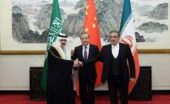
Middle East – Saudi Arabia 2023-
The Iran War Has Changed the World Forever
Some dramatic long-term consequences are just beginning to come into view.
Many of the immediate consequences of the Israeli-American war with Iran are already clear. The further emergence of drones and missiles as dominant weapons of war; the danger to the global economy from the threats to vital chokepoints such as the Strait of Hormuz and the Bab el-Mandeb; and the inadequacy of U.S. weapons procurement, among other issues, have garnered widespread and entirely merited attention.
Yet as important enough as those developments are, the Iran conflict could also have far wider and longer-term implications—changes that could be truly transformative for the Middle East region and the rest of the world. Decades from now, we might look back on this conflict as a watershed event that fundamentally reshaped what had been bedrock principles of modern geopolitics.
Energy companies, shipping companies, and insurance companies are all balking at the prospect of functioning with the residual threat of constant Iranian attacks, even if more than 90 percent are defeated. The 10 percent that have gotten through have done significant physical damage and far greater psychological damage. They called into question the current and planned future socioeconomic model of the Gulf states.
All of the modern Gulf economies were built in the expectation that their lands would be peaceful havens for commerce, hydrocarbon production, rest, and relaxation. Iran’s drone and missile attacks have shattered that, undermining the energy, manufacturing, trade, finance, investment, and tourism industries of the Gulf.
Who is going to want to invest, manufacture, or vacation in countries that are periodically subject to missile and drone attacks, even if nearly all of them are intercepted? Who wants to conduct business, import oil, invest money, trade goods, or take a vacation in a place where, a few times a week (or day), you hear explosions overhead, even if they are the sound of defensive systems successfully intercepting attacking munitions? – Kenneth M. Pollack, Vice president for policy, Middle East Institute –Foreign Policy
26-27 October
Iran, Saudi, Turkiye and Pakistan agree to more talks amid Houthi attacks
Top officials from four countries to continue talks on peace and security as Saudi forces shoot down more Houthi missiles.
(Al Jazeera) Saudi Arabia, Iran, Turkiye and Pakistan have agreed to continue talks for regional “peace and security” as the Saudi-led coalition fighting in Yemen said it had intercepted another barrage of missiles and drones fired by the Houthis at the kingdom.
The talks in Tehran on Monday were the first high-level contact between Iran and the three nations – which signed the Mecca mutual defence pact in August – since a war that began with US and Israeli strikes on Iran also spread to Saudi Arabia and Yemen.
Middle East peace held back by US insistence that Iran is a threat, Oman’s foreign minister says
Badr Albusaidi calls for security pact involving Gulf states, Iraq and Iran with US no longer primary provider of security
(The Guardian) The Middle East’s ability to solve its problems has been held back by America’s 50-year insistence that the Gulf states should view Iran as a security threat, Oman’s foreign minister said on Monday in a significant speech designed to break the deadlock over the region’s future.
Badr Albusaidi called for a non-aggression security pact involving all six Gulf states as well as Iran and Iraq. The US would in future no longer be the primary provider of security, he said.
He was speaking on the day high-level defence and intelligence officials from Turkey, Pakistan and Saudi Arabia travelled to Tehran in an attempt to prevent a renewed outbreak of fighting between the US and Iran.
25 October
Saudi air defences intercept Houthi barrage near Mecca
Yemen’s Houthi rebels launch a barrage of missiles and drones at Saudi Arabia, triggering widespread civil defence alerts and international condemnation.
19 October
The Iran War Has Changed the World Forever
Some dramatic long-term consequences are just beginning to come into view.
(Foreign Policy) Many of the immediate consequences of the Israeli-American war with Iran are already clear. The further emergence of drones and missiles as dominant weapons of war; the danger to the global economy from the threats to vital chokepoints such as the Strait of Hormuz and the Bab el-Mandeb; and the inadequacy of U.S. weapons procurement, among other issues, have garnered widespread and entirely merited attention.
13 October
Saudi Arabia strikes oil depots in Yemen and says missiles launched toward location of Saudi Aramco HQ
Civilians warned to leave target area near Sana’a before attacks as conflict between Riyadh and Houthi forces escalates
(The Guardian) Saudi Arabia has launched a series of strikes on a strategic oil depot on the outskirts of Yemen’s capital, Sana’a, while later on Tuesday it said it had intercepted missiles launched toward Dharan, location of the headquarters of the huge national energy company Saudi Aramco.
The attacks on both sides were a fresh escalation of the conflict between Riyadh and the Iran-backed Houthi forces. Before its offensive on Tuesday, a Saudi spokesperson warned civilians to leave the target area, in an apparent attempt to strike fear into the local population before the biggest attack so far on Houthi energy infrastructure.
12 October
The Gulf has entered a new era of instability. If its leaders think they can rely on old alliances, they are wrong
Nesrine Malik
The latest attack by Houthi rebels on Saudi Arabia may prove to be more calamitous for the region than the world imagines
… Over the past year, the Gulf has entered a new era of instability that is not temporary and cannot be reversed. …the gradual erosion of peace and security in places such as Saudi Arabia, Qatar and the UAE has changed the region more dramatically than its leaders would like to acknowledge.
… In retaliation for what Iran perceives to be political, military and logistical support for the offensive against it, Tehran struck Saudi Arabia, Qatar, the UAE, Bahrain, Kuwait and Oman. Iran targeted military sites, energy facilities, desalination plants – an entire infrastructure that underpins the economies of these countries. Much damage was inflicted by the suspension of normal life, the shuttering of schools for months, the closure of airports and airspace.
The most disastrous consequence of all, from the perspective of Gulf rulers, has been the way the attacks have disrupted the integration of these countries into the cosmopolitan international community as places for tourism, entrepreneurs, sports and entertainment. They spent billions in securing Formula One, golf and boxing franchises and tournaments, only for a flurry of cheap drones to put it all at risk.
The result is a fractious unravelling that has reactivated hostilities that had laid dormant. Yemen’s civil war began in 2014 when Iran-backed Houthi rebels, in aspiration to greater autonomy in the minority Shia homelands, took over the capital city, Sana’a. In 2015, a coalition of countries led by Saudi Arabia led a brutal campaign to dislodge the Houthis from territories they had gained, intensifying a grinding civil war that killed hundreds of thousands and triggered a humanitarian catastrophe. The war deescalated in 2022 with a de facto but unformalised division of the country between the Houthis and an internationally recognised, Saudi-backed government; the ceasefire was followed by rapprochement between Saudi Arabia and Iran.
But the 2026 war against Iran opened up strategic opportunities and stirred political loyalties, triggering a surge of Houthi advancement in Yemen.
The closure of the strait of Hormuz, for example, shifted more commercial traffic along Yemen’s coastline, prompting the Houthis to make advances and seize territory in order to gain control of the now crucial Bab al-Mandab strait in the Red Sea. …
10 October
How a series of miscalculations restarted Saudi Arabia’s war in Yemen
(CNN) Saudi Crown Prince Mohammed bin Salman wanted to make his kingdom a magnet for investment, tourism and the world’s biggest sporting events. Now drones and missiles launched from Yemen are slamming into Saudi cities, drawing the kingdom deeper into the regional turmoil he hoped to leave behind.
12 killed and over 300 hurt in latest attack on Riyadh airport, Saudi authorities say
Shortly after the attack on Saturday afternoon, U.S. President Donald Trump said he was evaluating whether the U.S. should join Saudi strikes against the rebels.
4 October
Saudi-Backed Yemeni Government Declares War Against Houthis
More than 200 U.S. intelligence and military analysts are in Saudi Arabia helping it provide assistance to its Yemeni allies, current and former U.S. officials say.
(NYT) The Saudi-backed government of Yemen on Sunday announced a major military campaign against the Houthi militia, a key Iranian ally, plunging the Middle East deeper into war.
The new operation threatens to open a new front in the U.S.-Israeli war with Iran and further entangle the United States in the widening regional conflict that it began more than seven months ago.
More than 200 U.S. intelligence and military analysts are assisting the Saudi government in command centers inside the kingdom, helping to analyze and select targets in support of its Yemeni allies, according to one current and one former U.S. official, who spoke on the condition of anonymity to discuss operational matters. The United States is also providing aerial refueling for Saudi warplanes conducting defensive air patrols, they added.
In a televised speech, Rashad al-Alimi, the leader of the internationally recognized Yemeni government — which depends heavily on Saudi Arabia for financial and military support — said that his armed forces were seeking to reclaim the territory lost to the Houthis over the past 12 years.
25 September
Gulf States Are Hedging and Suffering
Neither appealing to Washington nor diversifying security partners nor back-channeling with Tehran is insulating the region from the consequences of war.
By Shawn A. Howard, a former CIA analyst focused on the Middle East and counterterrorism.
(Foreign Policy) As the Iran war drags on, members of the Gulf Cooperation Council (GCC)—Bahrain, Kuwait, Oman, Qatar, Saudi Arabia, and the United Arab Emirates—face an acute paradox. They still depend on the United States for protection from Iran. But that protection has proved its limits while simultaneously increasing the risk of Iranian attacks.
In response, the GCC states have adopted several overlapping strategies. They continue to cooperate with the United States, particularly to defend militarily against Iranian strikes. But at the same time, they are diversifying their regional security relationships, pursuing diplomacy, and, when necessary, engaging directly with Tehran. The last of these measures may seem duplicitous, but for Gulf states, it is a necessary survival mechanism. What’s more, a long war with rising costs may push the Gulf states toward greater even accommodation with Tehran.
16 September
Why Yemen Is Spiraling Back Into War
The Houthi militia, the Yemeni government, Iran and Saudi Arabia all have reasons to escalate the conflict. Here’s what to know.
(NYT) After four years of stalemate, Yemen is teetering on the verge of all-out war again, further threatening the stability of the Middle East.
Fighting is escalating inside the impoverished country between the Iran-backed Houthi militia and Yemeni government forces — as well as across its borders, between the Houthis and Saudi Arabia. Analysts say that all sides have an incentive to ramp up the conflict.
On Thursday, the Houthis captured a strategic port on the Red Sea, in a sweeping ground offensive that could give the group greater control over an important shipping route.
Saudis pound Yemen, Houthis fire at Saudi, as Middle East war spreads
US orders government staff to avoid Yemen border
Saudis say Houthi drone shot down near Mecca
Houthis deny there was an attack there
Houthis say they shot down Saudi fighter
There is no confirmation of this from Riyadh
(Reuters) – Saudi warplanes pounded Yemen and Houthi fighters launched drones and missiles at Saudi cities, the Iran-backed movement said on Wednesday, after a lightning advance that has extended Tehran’s reach in the Middle East war.
In a sign of the worsening conflict in a new theatre, the United States tightened its travel warning for Saudi Arabia, banning government employees from travelling within 20 miles of the Yemen border. …
DANGER OF GLOBAL ENERGY SUPPLY SHORTAGE WORSENING
The extension of the war into Yemen threatens to worsen the global energy supply shortage caused by the six-month-old U.S.-Israeli war on Iran, which has disrupted shipping through the Strait of Hormuz. …
Traders say a prolonged closure of Saudi Arabia’s East-West Pipeline could cut off as much as 4% of global oil supply. Saudi Arabia has not said when operations might resume, but U.S. Energy Secretary Chris Wright told CNBC on Tuesday that crude oil should be flowing through the pipeline within days.
Saudi Arabia has led a coalition battling the Houthis since 2015. The conflict had largely quietened under a ceasefire in recent years, but reignited when the Houthis declared a naval blockade against Saudi Arabia in July and fired at southern areas in the kingdom. Violence has intensified sharply this month when the militant group pushed back forces aligned with the Saudi-backed internationally recognised Yemeni government.
Saudi Arabia’s Crown Prince Mohammed bin Salman phoned U.S. President Donald Trump last week seeking military support, which so far has been limited to intelligence aid.
The United States bombed the Houthis for two months in 2025, but halted that campaign after reaching what President Donald Trump described as a ceasefire that would halt attacks on ships.
Saudi strikes and Houthi attacks widen Middle East war
The Seizure of Bab el-Mandeb: Why Tanker Rates Are Exploding
(What’s Going on With Shipping?) The Houthis have seized key coastal areas along the Red Sea—including the port of Mocha and Perim Island—tightening their grip on the Bab el-Mandeb Strait. Maritime historian Sal Mercogliano breaks down what this critical development means for global shipping, oil flows, tanker rates, and supply chain security across the Middle East.
13 September
Meeting Between Iran, Arab States Postponed as Mideast Diplomacy Stalls
Talks between the United States and Iran hit a dead end weeks ago, leaving Arab countries struggling to manage their ties to Tehran amid ongoing attacks.
(NYT) Iran and Oman, which border the strait, have been negotiating for weeks over how to reopen the waterway, discussing arrangements that would likely involve some kind of service fee. Before the war, ships could travel freely through the Strait of Hormuz.
Even if a deal is reached, however, Iranian officials have demanded concessions from the United States before ending their blockade, including lifting sanctions on Iran and releasing Iranian assets frozen overseas. The Trump administration is unlikely to take those steps without Iran agreeing to curb its nuclear program.
Yemen has emerged as another front in the fighting. The Iranian-backed Houthi militants there seized the strategic port of Mokha and the island of Perim in the Bab al-Mandab Strait in the Red Sea last week from the Saudi-backed, internationally-recognized government. They have also attacked Saudi energy sites and sought to blockade Saudi shipping.
Saudi Arabia was forced to shut its East-West Pipeline on Friday after it was targeted by drones from Iraq. That pipeline has been a critical lifeline for the country’s oil exports, after Iran blockaded the Strait of Hormuz. No one took responsibility for the attack, but Iraq has long harbored well-armed militias backed by Iran.
On Sunday, Houthi forces attacked a military site near the southern city of Sharurah, Yahya Saree, a Houthi military spokesman, said on social media. Saudi officials said at least two people had been wounded and a mosque was damaged when a projectile fell in a neighboring province, state news media reported.
Iran and its allies have repeatedly attacked neighboring countries during the war, saying they were targeting the U.S. soldiers and military assets they hosted.
But as the conflict has dragged on, Gulf states like the United Arab Emirates and Qatar are having to manage their relationship with a newly emboldened Iran. The aborted attempt at the joint meeting underscored how difficult it is to forge a common approach, however.
Fighting in Yemen intensifies, and Houthis launch more attacks on Saudi Arabia
(AP) — The conflict in Yemen intensified on Sunday, as government forces launched attacks against Iran-backed Houthi rebels along the Red Sea and Houthis fired into neighboring Saudi Arabia, which supports Yemen’s government.
The Yemeni government vowed to send more forces to the Red Sea coast and one official conceded a “painful” defeat last week when Houthis captured the port city of Mokha and an island on the Bab el-Mandeb Strait, a crucial shipping alternative to the Strait of Hormuz.
The escalation – especially Houthi attacks on Saudi oil infrastructure and its shipping in the Red Sea – adds pressure on global oil supplies and prices, and that could give Iran leverage in its war with the United States.
As Yemen risks descending into another civil war, the United Nations estimated that more than 80,000 people in the impoverished country have been displaced by the fighting since the start of September.
Iran’s Houthi allies capture strategic island on vital oil shipping route
Rampant Yemeni fighters take control of island in narrow point of Bab al-Mandab strait, which Saudi is relying on for oil exports
Yemen’s rampant Houthi forces have captured the strategic island of Perim in the Bab al-Mandab strait, expanding their control of the narrow waterway, one of the world’s vital shipping routes. …
The Bab al-Mandab strait links Asia to Europe via the Red Sea and Suez canal. Perim island, also known as Mayun, divides the waterway in two, close to its narrowest point. The United Arab Emirates, a former Saudi ally in the anti-Houthi coalition, had been building an airbase on the island before ending its active involvement in the conflict in January. …
The Houthi progress down the Red Sea coast from the port of Hodeidah also strengthens Iran’s hand in trying to reach an agreement with other Gulf states on future control of the strait of Hormuz, the central dispute between the US and Iran. Iran has reached an agreement on temporary approved routes with Oman, the country sharing the southern coast of the Hormuz strait. The proposed deal is supposed to be discussed at a meeting of Gulf Cooperation Council (GCC) foreign ministers in the Omani coastal city of Salalah on Monday.
The deal, including a temporary approved route for shipping largely under Iranian control, would – if agreed by the GCC – put pressure on the US to lift its highly effective blockade of Iranian oil ports, which is severely damaging the Iranian economy.
8-11 September
Iranian allies captured a strategic Red Sea island in a vital waterway. Here’s what to know
(CNN) … The news sent shockwaves worldwide over the possible impact on shipping and oil prices, as well as the risk of a new front opening in the US-Iran war.
Bab al-Mandeb is a chokepoint linking Asia and Europe via the Red Sea and Suez Canal. Although less critical to the oil trade than the Strait of Hormuz, it carries essential goods worldwide, including millions of barrels of oil each day.
Its strategic importance has grown since the US-Iran war began, as Saudi Arabia increasingly uses its Red Sea export route to bypass the Strait of Hormuz, which Iran has effectively closed to most shipping. …
Gulf Tankers Are Running Out of Ways to Export Oil: ‘These Waters Aren’t Safe’
Ship operators already faced severe risks in navigating the region, and now the danger is higher as Houthi militias assert control in the Red Sea.
(NYT) The U.S. Navy has been able to keep oil flowing out of the Strait of Hormuz on sea paths close to the coast of Oman, the opposite side from Iran. But that has required an extensive and dangerous operation.
For shipping companies, the once routine operation of navigating the strait has become a high-risk endeavor. At least 23 ships were hit in the waterway near Oman in July and August. Since the war began at the end of February, at least 22 sailors have been killed in the Middle East. …
As the war in Iran nears its seventh month, it appears to be spinning out of control, analysts said. With no diplomatic end in sight, the Middle East, the epicenter of energy production, is facing its most severe supply crisis in decades.
Iran’s Houthi allies capture strategic island on vital oil shipping route
Rampant Yemeni fighters take control of island in narrow point of Bab al-Mandab strait, which Saudi is relying on for oil exports
(The Guardian) Yemen’s rampant Houthi forces have captured the strategic island of Perim in the Bab al-Mandab strait, expanding their control of the narrow waterway, one of the world’s vital shipping routes.
The Iran-aligned Houthis took control of the volcanic island after forces allied to the UN-backed, Aden-based government left in the latest of a dramatic series of reverses along Yemen’s west coast in recent days, including the loss of the port city of Mocha on Thursday.
The rapid Houthi advance in Yemen: why it matters and what’s at stake
The Houthis have wrested control of Yemen’s Red Sea coast from Saudi-backed government, giving Iran and its allies control over a key shipping lane
Houthis strike Saudi Arabian cities in significant expansion of Middle East war
Riyadh says it will retaliate after overnight attacks by Iran-backed Yemen group on oil facilities wound more than 70
Scores wounded as Iran-backed Houthis attack Saudi Arabia in major regional escalation
(CNN) … The attacks mark a dramatic escalation in the Saudi-Houthi conflict, which flared up again in July, shortly after the US-Iran ceasefire unraveled, with Houthi missile attacks on Saudi oil facilities and tankers in an expansion of the Middle East war.
… Saudi diplomats had notified US lawmakers in August of a breakdown in political channels with the Houthis and the rebels’ plans to escalate against the kingdom, and sought Washington’s backing to push back, the source said.
“(The Saudis) are aligned with CENTCOM on the next steps and have made European partners aware too,” the source said, referring to the US military’s Central Command, and adding that retaliation had “always been the fallback plan should the Houthis attack.”
It’s unclear what form or intensity that retaliation would take.
… The kingdom is also working to bring other countries, some of which had been wary of being seen as joining the US war with Iran, into efforts to push back against the Yemeni rebels, the source said. …
7 September
Trump’s blockade pushes Iran toward military escalation
(CNN) … Iran’s military officials are increasingly touting new tactics in response to the pressure, threatening to target nations taking part in the blockade and warning that they could broaden the conflict. …
4 September
Scoop: Trump administration drafting post-war Middle East plan
(Axios) The Trump administration is working on a post-war strategy focused on a regional effort to contain Iran and expand normalization of relations between Israel and its neighbors, according to two U.S. officials and two other sources with knowledge of the issue.
Why it matters: While the plan is still in the early stages of drafting, it’s intended to guide the U.S. approach in the Middle East after the Iran war ends and in the final two years of President Trump’s term. Two big events loom over the planning: the Oct. 27 election in Israel and the U.S. midterm elections in November.
Three main elements have been raised as possible parts of the strategy, according to the sources:
– Creating a regional alignment among U.S. allies to contain Iran, with the U.S. as a guarantor.
– Making a concerted effort to bring the regional fallout from the Oct. 7, 2023, attacks closer to a conclusion by securing the next phase of Trump’s Gaza plan, reaching a security agreement between Israel and Syria, and implementing the Israel-Lebanon agreement.
– Expanding the Abraham Accords and reaching a Saudi-Israeli normalization agreement.